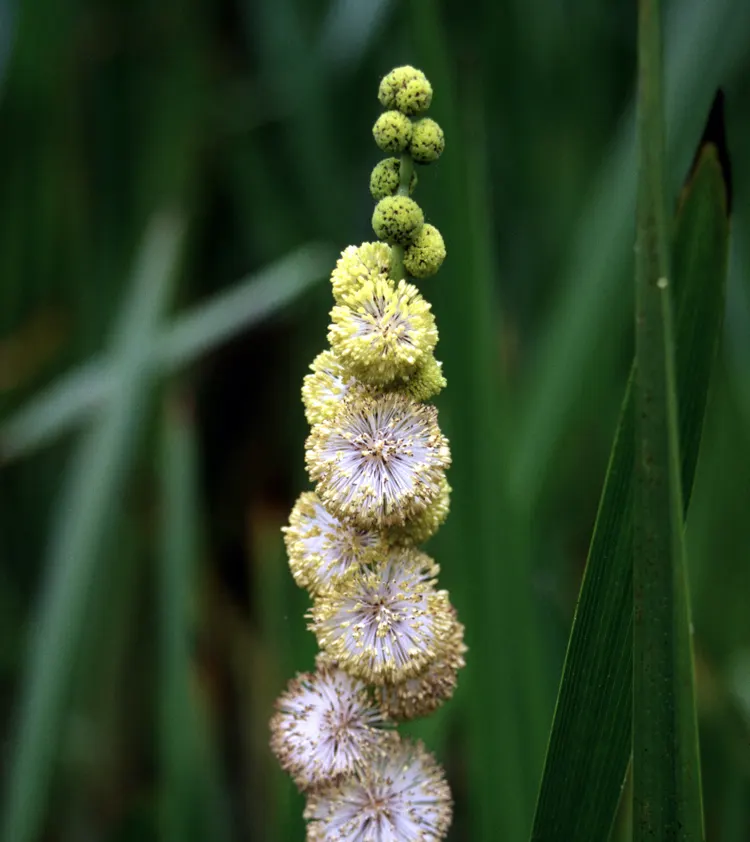
Photo: Gordon Leppig & Andrea J. Pickart, Public domain (via Wikimedia Commons)
Broadleaf Bur-reed
Sparganium eurycarpum
Also known as Giant Bur-reed, Common Bur-reed
Key benefits
✦Traditional uses
✦Broadleaf bur-reed is better known as a wetland provider than as a medicinal herb. Its starchy rhizomes and young tubers were gathered by some Native American communities from marsh mud in autumn, in the same way people dug wapato and other wetland roots, then roasted or boiled them as a foraged vegetable. The seed heads and shoots have long fed migrating waterfowl, and the plant's real legacy is as a quiet cornerstone of marsh life, feeding both people and wildlife where cattails and bulrush also grow. There is little reliable record of it being used as a household remedy the way other herbs were.
How to grow & use it
✦The full apothecary for Broadleaf Bur-reed
Traditional remedies and step-by-step preparations, a complete growing guide, and how to harvest, dry, and store it, all unlocked with HerbLens Unlimited.
- ✦Remedies & preparations
- ✦ Growing guide
- ✦Harvest & storage
From under $6 a month. Free plant identifications always included.
- ✦Cattail (Typha)
- ✦Arrowhead / Wapato (Sagittaria)
- ✦Pickerelweed (Pontederia)
- ✦Wapato tuber
- ✦Cattail rhizome
“For the wild, green fringe at the water's edge, where the marsh does its quiet work.”
Those spiky, floating seed balls that give bur-reed its name are built to travel. They bob on the water's surface and are dispersed both by currents and by the ducks and geese that eat them, which is why a single healthy patch of bur-reed can seed an entire marsh over time.
Broadleaf bur-reed itself isn't documented as toxic, but it grows in the same marshy ground as water hemlock, one of the most poisonous plants in North America, so never gather a wetland root without expert identification.