Photo: Heinrich Gustav Adolf Engler (1844 – 1930), Public domain (via Wikimedia Commons)
Kombe (Kombe Arrow Poison Vine)
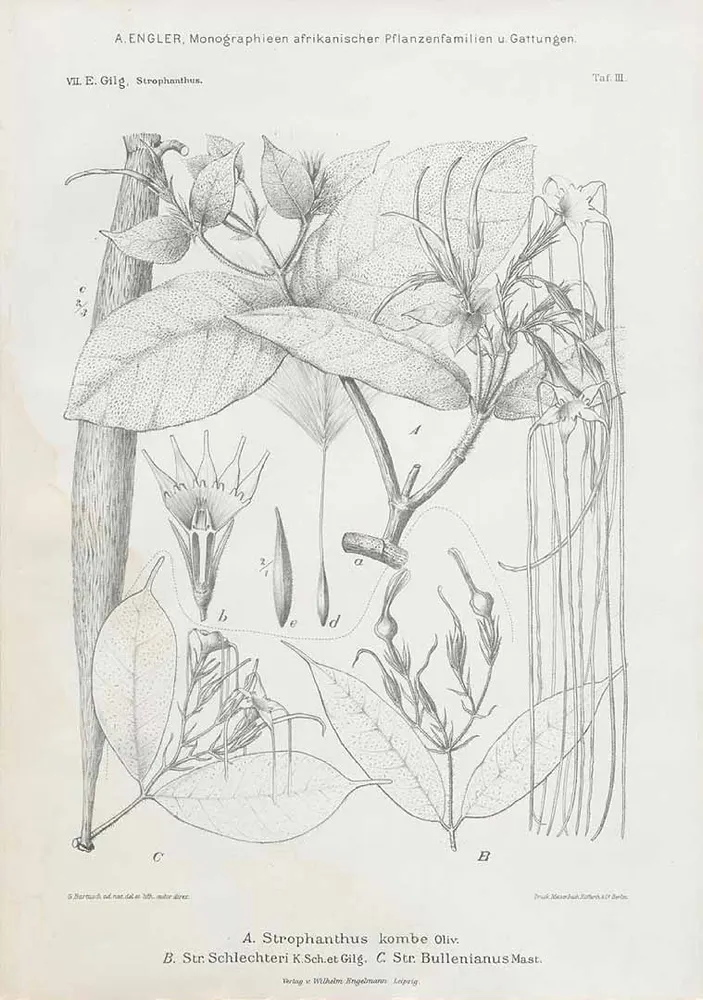
Strophanthus kombe
Also known as Kombe Arrow Poison, Strophanthus, Poison Rope, Quabain Vine
Traditional uses
✦Strophanthus kombe holds a strange double history. For generations, hunters across East and Central Africa pounded its seeds into a paste to coat arrow tips, a poison potent enough to bring down large game. In the mid nineteenth century, the plant traveled the opposite direction into Western medicine after the Scottish physician John Kirk, traveling with David Livingstone's Zambezi expedition, watched local hunters prepare the poison and carried seed samples home. Researchers in Edinburgh isolated the seed's cardiac glycosides, and for a time strophanthin extracts were used in European hospitals as an emergency heart stimulant, given only by injection under close medical watch. That clinical use faded decades ago as safer cardiac drugs emerged, but the plant remains a landmark in the story of how a hunting poison became a subject of serious pharmacology.
How to grow & use it
✦The full apothecary for Kombe (Kombe Arrow Poison Vine)
Traditional remedies and step-by-step preparations, a complete growing guide, and how to harvest, dry, and store it, all unlocked with HerbLens Unlimited.
- ✦Remedies & preparations
- ✦ Growing guide
- ✦Harvest & storage
From under $6 a month. Free plant identifications always included.
“A vine for the herbarium shelf and the history books, not the teacup, its beauty carrying a very real warning.”
The vine's common name comes from the local East African word for the plant that John Kirk recorded when he sent seed samples back to Scotland, and the compound later isolated from them, strophanthin, became one of the first plant-derived cardiac glycosides studied by Western pharmacologists, decades before digitalis chemistry was fully understood.
Strophanthus kombe is highly toxic and should never be ingested, brewed, or self-prepared in any form. Its seeds contain potent cardiac glycosides (collectively known as k-strophanthin, closely related to ouabain) that act directly on the heart; even small amounts can cause dangerous arrhythmia, cardiac arrest, and death. It has traditionally been used across its native range as an arrow poison for hunting, and the same compounds were once used in Western medicine only as physician-administered injections in hospital settings, a practice long abandoned in favor of safer cardiac drugs. There is no safe home dose, no folk tea, and no topical preparation that mitigates this risk. Keep all plant material, especially seeds, away from children, pets, and livestock. If ingestion is suspected, treat it as a medical emergency and contact emergency services or a poison control center immediately. This entry is provided for botanical and historical reference only; always consult a qualified medical or toxicological professional rather than attempting any personal use of this plant.