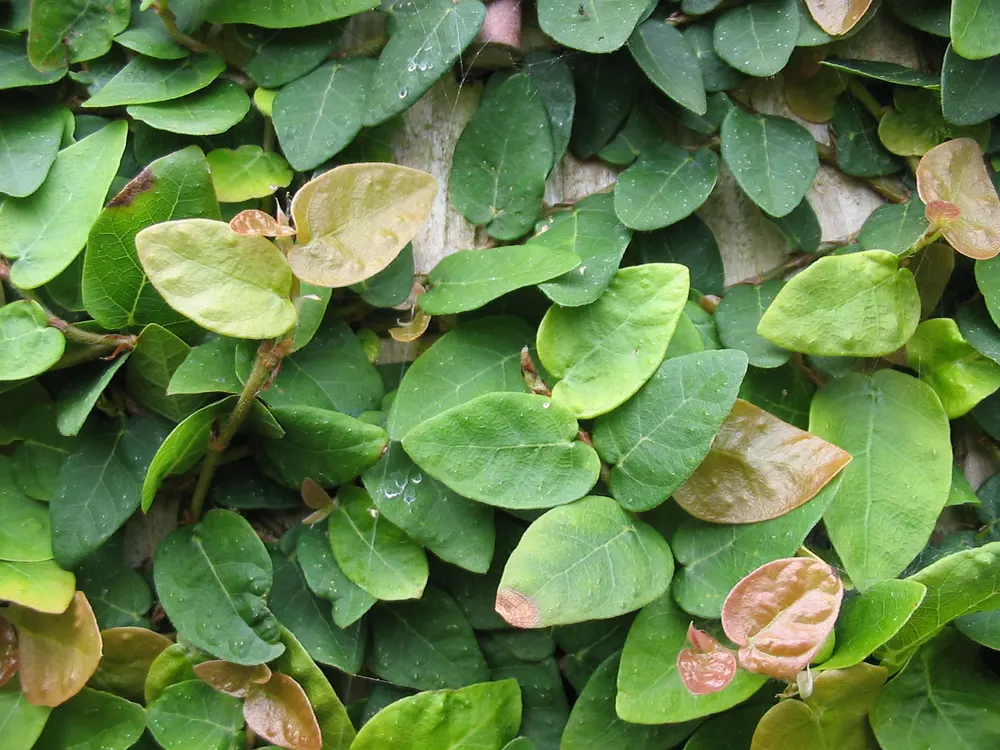
Photo: Ixitixel, CC BY-SA 3.0 (via Wikimedia Commons)
Creeping Fig
Ficus pumila
Also known as Bi Li, Climbing Fig, Aiyu Fig, Ivy Fig
Key benefits
✦Traditional uses
✦In traditional Chinese medicine, creeping fig is known as bi li, and the fruiting vine has long been valued as a cooling, soothing plant, taken to ease joint aches and settle the digestion. In the mountain villages of Taiwan, the ripe fruit gave rise to a beloved folk tradition of its own: washing the tiny seeds by hand in water until they release a natural pectin that sets into a delicate, jade-clear jelly. Nursing mothers in parts of southern China traditionally turned to preparations of the fruit to help support their milk supply, a practice passed down through generations of home herbalists long before it was ever written into any formal text.
How to grow & use it
✦The full apothecary for Creeping Fig
Traditional remedies and step-by-step preparations, a complete growing guide, and how to harvest, dry, and store it, all unlocked with HerbLens Unlimited.
- ✦Remedies & preparations
- ✦ Growing guide
- ✦Harvest & storage
From under $6 a month. Free plant identifications always included.
- ✦Lemon
- ✦Honey
- ✦Mint
- ✦Basil seeds (for a similar jelly texture)
- ✦Chia seeds
“For a cool, jade-clear treat that has soothed hot afternoons for generations.”
Aiyu jelly is said to take its name from a young girl named Ai-Yu, whose father discovered a mountain stream in Taiwan running strangely thick after fig seeds had washed into it and set into a natural jelly; she is remembered as the first to sell bowls of the cooling treat on the streets below.
Creeping fig's milky latex can irritate skin and cause a rash if exposed to sun afterward. Only the mature fruit's seed gel is eaten, not the leaves or unripe fruit, and pregnant or nursing individuals should use caution since it has traditionally been linked to milk flow.