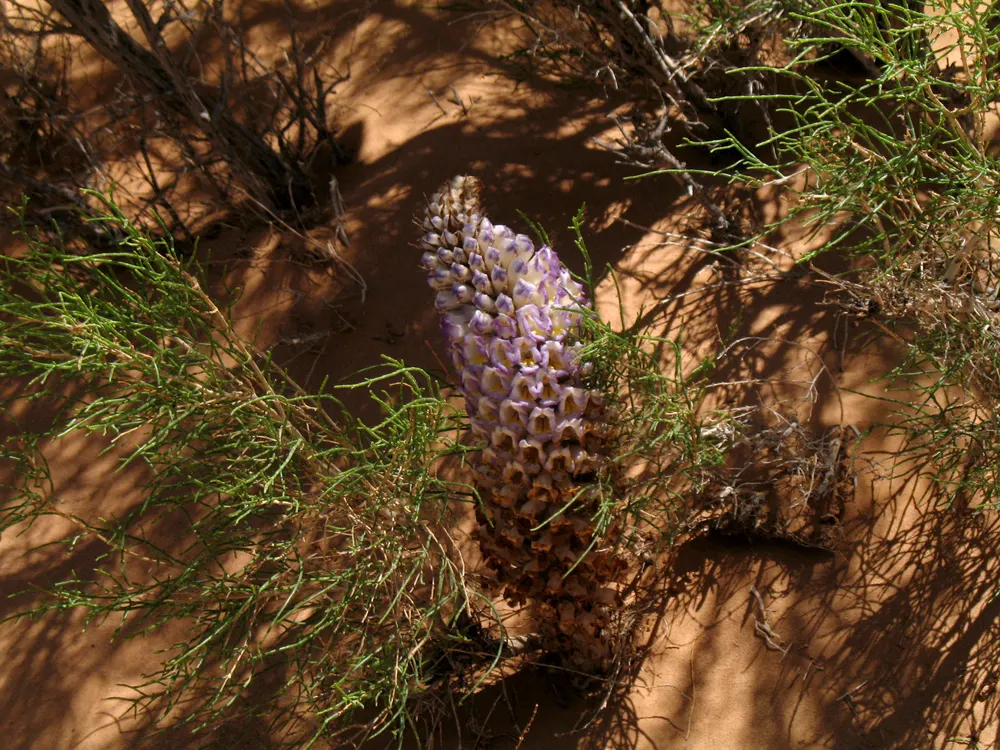
Photo: Yanish E, CC BY 4.0 (via Wikimedia Commons)
Desert Broomrape
Cistanche deserticola
Also known as Rou Cong Rong, Desert Cistanche, Ginseng of the Desert, Saline Cistanche
Key benefits
✦Traditional uses
✦Cistanche has been treasured in Chinese medicine for well over a thousand years, appearing in some of the oldest herbal texts as a tonic for the kidneys and for what practitioners called yang energy, the body's warmth and drive. Desert traders along the Silk Road are said to have carried it as a restorative on long, punishing journeys, which helped earn it the nickname ginseng of the desert. It has traditionally been used to gently support digestion and ease occasional constipation in the elderly, valued for working softly rather than harshly. Because true wild Cistanche is rare and slow to harvest, it has long carried a reputation as a precious, almost ceremonial tonic root.
How to grow & use it
✦The full apothecary for Desert Broomrape
Traditional remedies and step-by-step preparations, a complete growing guide, and how to harvest, dry, and store it, all unlocked with HerbLens Unlimited.
- ✦Remedies & preparations
- ✦ Growing guide
- ✦Harvest & storage
From under $6 a month. Free plant identifications always included.
- ✦Goji Berry
- ✦Eucommia Bark
- ✦Schisandra
- ✦Epimedium (Horny Goat Weed)
- ✦Eucommia Bark
“For steady, grounded vitality, the way desert travelers once leaned on it to outlast the long road.”
Cistanche deserticola has no chlorophyll and cannot photosynthesize at all. It spends its entire life underground, tapping into the roots of the saxaul tree like a straw, and only pushes its flowering spike above the sand once a year to bloom.
Cistanche's gentle laxative effect means larger amounts can cause loose stools, so it's best avoided by anyone prone to diarrhea. Avoid during pregnancy and breastfeeding, and use caution alongside blood pressure or hormone medications.