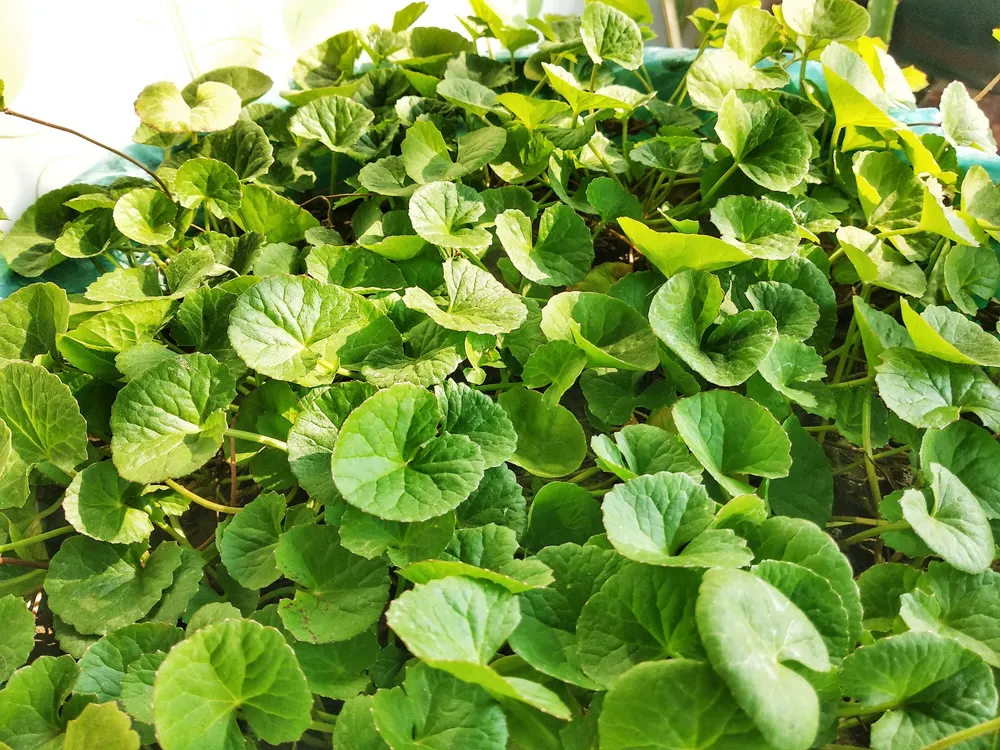
Photo: Shahidul Hasan Roman, CC BY-SA 4.0 (via Wikimedia Commons)
Gotu Kola
Centella asiatica
Also known as Indian Pennywort, Asiatic Pennywort, Tiger Grass, Brahmi (in parts of South Asia, though this name more often belongs to Bacopa monnieri)
Key benefits
✦Traditional uses
✦In Ayurvedic medicine, gotu kola has long been counted among the great rasayana herbs, the rejuvenating plants believed to support a long and clear-headed life. Healers across India, Sri Lanka, and Indonesia traditionally reached for its leaves to tend wounds, soothe skin, and steady tired legs and veins, while scholars and monks were said to chew the fresh leaf to sharpen memory before study or meditation. In traditional Chinese medicine it appears as well, valued as a cooling herb for the skin and the mind. It grew low and unassuming at the water's edge, yet it earned a place in nearly every herbal tradition it touched.
How to grow & use it
✦The full apothecary for Gotu Kola
Traditional remedies and step-by-step preparations, a complete growing guide, and how to harvest, dry, and store it, all unlocked with HerbLens Unlimited.
- ✦Remedies & preparations
- ✦ Growing guide
- ✦Harvest & storage
From under $6 a month. Free plant identifications always included.
- ✦Ginkgo
- ✦Holy basil (Tulsi)
- ✦Turmeric
- ✦Bacopa monnieri (often also called Brahmi)
- ✦Ginkgo biloba
“When you want an old, quiet tonic for clear thinking and calm skin.”
In parts of Southeast Asia, gotu kola is called tiger grass, from old stories that tigers wounded in fights would roll in the plant to help their wounds heal.
Gotu kola tea is generally well tolerated in modest amounts, but prolonged or concentrated use has been linked to liver strain, and it can increase skin sensitivity to sunlight. It may add to the effect of sedatives and can interact with blood sugar or cholesterol medications, and it's best avoided during pregnancy and before surgery.