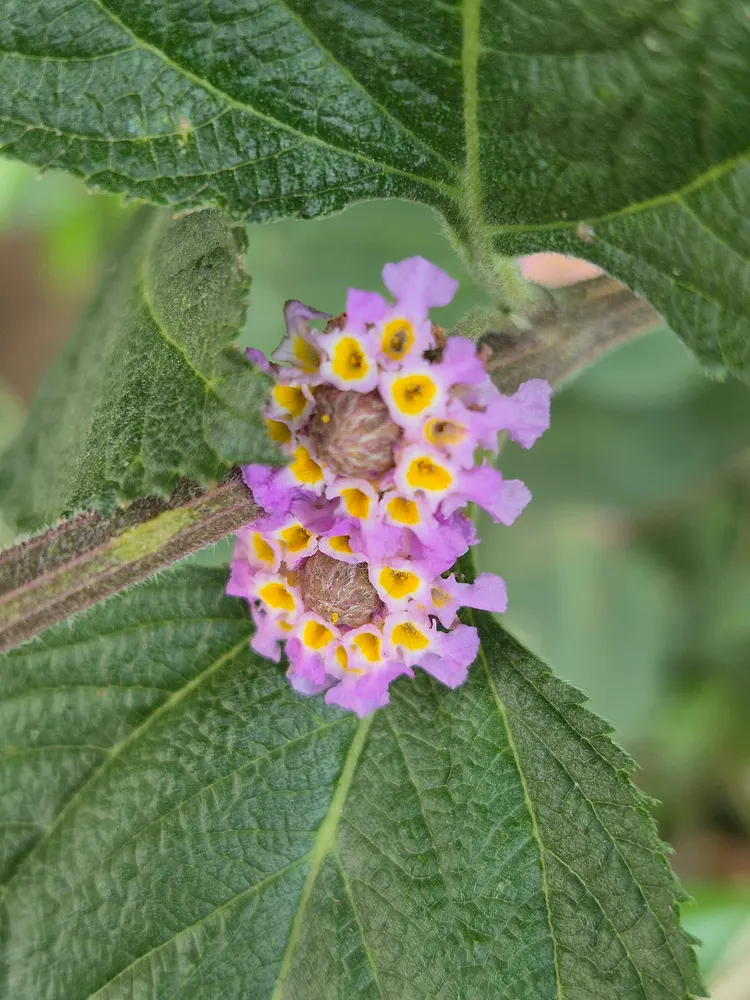
Photo: Bageense, CC BY-SA 4.0 (via Wikimedia Commons)
Bushy Matgrass
Lippia alba
Also known as Bushy Matgrass, Bushy Lippia, Juanilama, Erva Cidreira, Salvia Real
Key benefits
✦Traditional uses
✦Across the herb's tropical homeland, it goes by nearly as many names as there are kitchens that grow it, juanilama in Costa Rica, salvia in parts of Mexico, erva cidreira in Brazil, each community steeping its bushy, lemon-scented leaves into a comforting after-dinner tea. Traditionally, it has been used to help settle a nervous stomach, ease the tightness of a chest cold, and quiet a restless mind before sleep. Home gardeners have long kept a bush by the kitchen door precisely because it is so ready to hand, a few leaves crushed and dropped into hot water at the first sign of a stressful evening or an achy belly. It has traveled with cooks and healers for generations, prized less for spectacle than for its steady, everyday usefulness.
Growing guide
✦Fresh to dried
✦Traditional preparations
✦Evening Calming Tea
A gentle, lemony infusion traditionally sipped in the evening to help unwind after a long day.
How it's made. Traditionally, a tea is made by steeping 1 teaspoon of the dried leaves (or 2 teaspoons fresh, lightly crushed) in 250 ml of just-boiled water for 8 to 10 minutes, then strained and sipped warm.
After-Meal Digestive Infusion
A warm cup traditionally taken after eating to help settle a heavy or uneasy stomach.
How it's made. Traditionally, 1 teaspoon of dried leaf is steeped in 250 ml of just-boiled water for about 8 minutes, then sipped slowly in the twenty minutes or so after a meal.
- ✦Lemon balm
- ✦Chamomile
- ✦Peppermint
- ✦Lemon verbena
- ✦Lemon balm
“For the evening the day won't quite let go of, and a cup that smells like lemon and quiet is exactly what's needed.”
In Brazil this plant is called erva cidreira, the very same nickname many Brazilians use for true lemon balm (Melissa officinalis), even though the two are unrelated. Both simply smell so strongly of lemon that generations of cooks reached for the same comforting name.
Bushy Matgrass is generally safe brewed as a traditional tea, but its essential oil is far more concentrated and shouldn't be taken internally without guidance. It may add to the effect of sedatives or sleep aids, and it's best avoided during pregnancy and breastfeeding since safety data is limited.