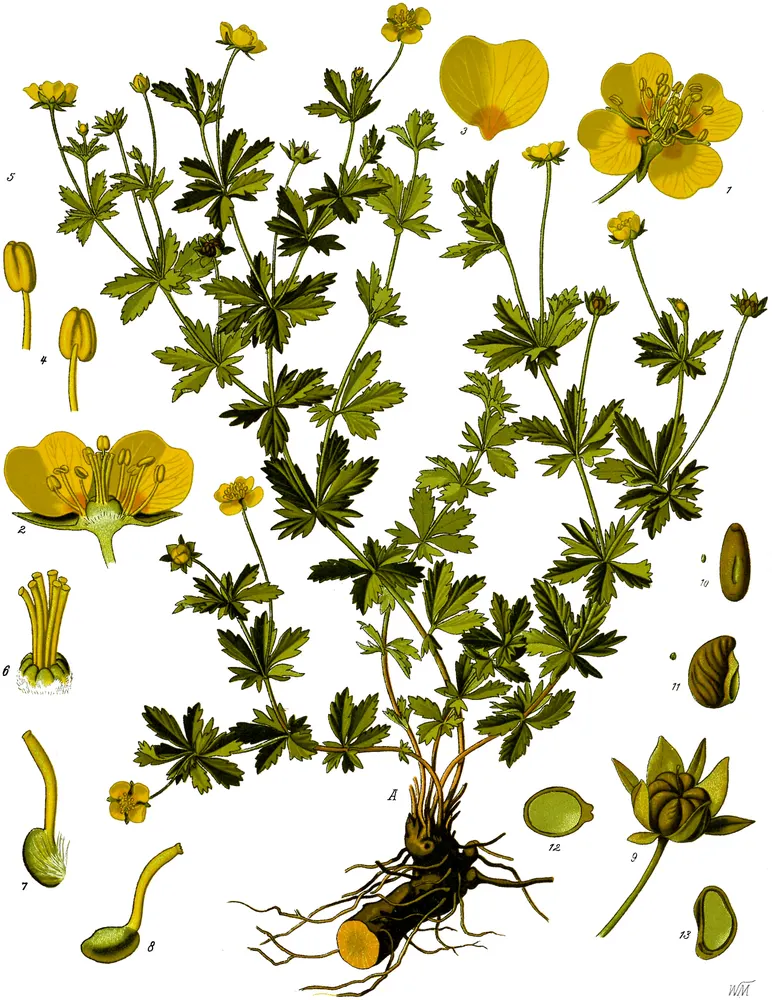
Photo: Franz Eugen Köhler, Köhler's Medizinal-Pflanzen, Public domain (via Wikimedia Commons)
Tormentil
Potentilla erecta
Also known as Bloodroot (European), Septfoil, Shepherd's Knot, Erect Cinquefoil
Key benefits
✦Traditional uses
✦Tormentil carries one of the highest tannin contents of any European herb, and folk healers leaned on that astringency for centuries to calm an unsettled digestive tract. Its very name comes from the Latin tormentum, a nod to the griping abdominal pain it was traditionally called upon to ease. Highland and Nordic households kept the knotty root on hand as a humble remedy for loose stools, sore gums, and small wounds, long before it found its way into any apothecary cabinet. It was herbal medicine at its most practical, a plain moorland root doing steady, unglamorous work.
How to grow & use it
✦The full apothecary for Tormentil
Traditional remedies and step-by-step preparations, a complete growing guide, and how to harvest, dry, and store it, all unlocked with HerbLens Unlimited.
- ✦Remedies & preparations
- ✦ Growing guide
- ✦Harvest & storage
From under $6 a month. Free plant identifications always included.
- ✦Agrimony
- ✦Meadowsweet
- ✦Plantain
- ✦Agrimony
- ✦Oak bark
“For the quiet, tannin-steadied comfort of an old moorland remedy, when things need gently firming up rather than stirring.”
Slice into a fresh tormentil root and it bleeds a deep reddish resin, which Highland and Faroese communities once used to tan leather and dye wool a warm rust brown, long before anyone thought to steep it as a tea.
Tormentil's high tannin content means it's best used in modest amounts, since too much can irritate the stomach and reduce iron absorption. Avoid it during pregnancy and breastfeeding, and if you have a bowel obstruction or severe constipation.