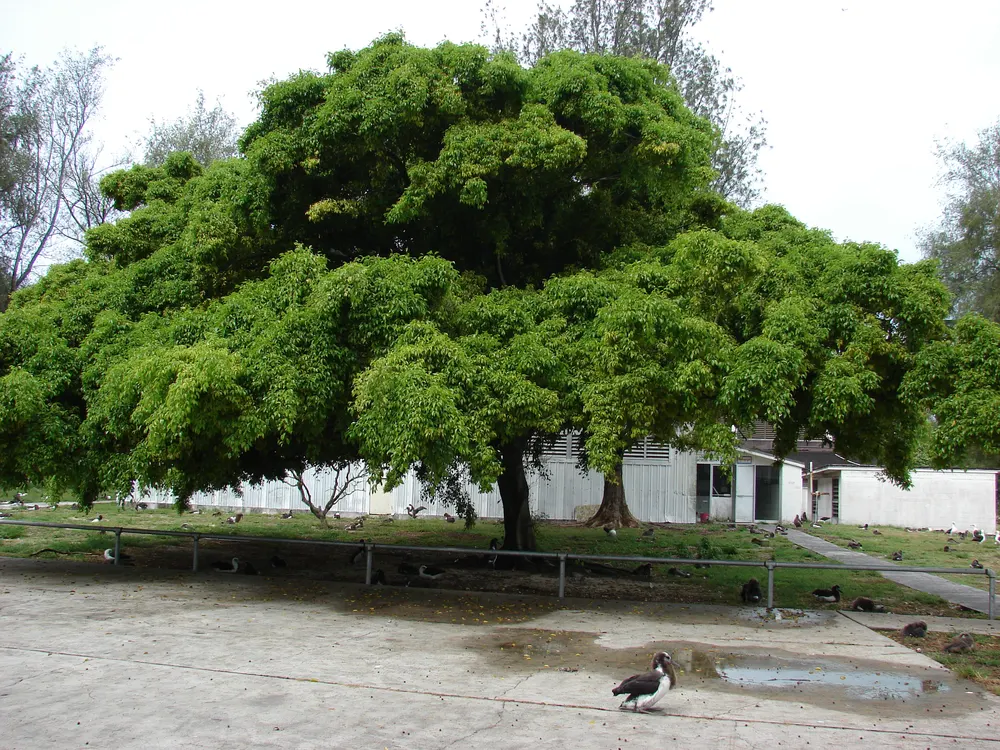
Photo: Forest and Kim Starr, CC BY 3.0 us (via Wikimedia Commons)
Weeping Fig
Ficus benjamina
Also known as Weeping Fig, Benjamin Fig, Java Fig, Tropic Laurel, Small-leaf Fig
Key benefits
✦Traditional uses
✦Across South and Southeast Asia, fig trees like this one have long been planted beside temples, homes, and village squares, their cascading branches and aerial roots woven into local folklore as symbols of longevity, shelter, and ancestral presence. Some traditional healers in the region turned to the leaves and bark of related fig species for minor skin complaints, though Ficus benjamina itself was valued far more as shade and ornament than as a medicine chest plant. Its modern fame rests largely on a different kind of tradition: it has become one of the most beloved indoor trees in the world, brought into homes and offices for its elegant, weeping form as much as any practical use. In the late 1980s, it also earned a place in NASA's landmark Clean Air Study, which found it capable of drawing common household toxins like formaldehyde out of indoor air.
How to grow & use it
✦The full apothecary for Weeping Fig
Traditional remedies and step-by-step preparations, a complete growing guide, and how to harvest, dry, and store it, all unlocked with HerbLens Unlimited.
- ✦Remedies & preparations
- ✦ Growing guide
- ✦Harvest & storage
From under $6 a month. Free plant identifications always included.
- ✦Pothos
- ✦Peace lily
- ✦Rubber plant
- ✦Rubber plant (Ficus elastica)
- ✦Fiddle-leaf fig (Ficus lyrata)
“For a graceful, ever-green presence that fills a room with quiet shade rather than a spoonful of medicine.”
When NASA researchers tested common houseplants for their ability to scrub toxins like formaldehyde from sealed chambers in 1989, the weeping fig was one of the standout performers, which helped cement its reputation as one of the great air-purifying houseplants.
The milky sap can irritate skin and eyes and is a common trigger for latex-related allergies and asthma symptoms; the plant is also toxic to cats and dogs if chewed.