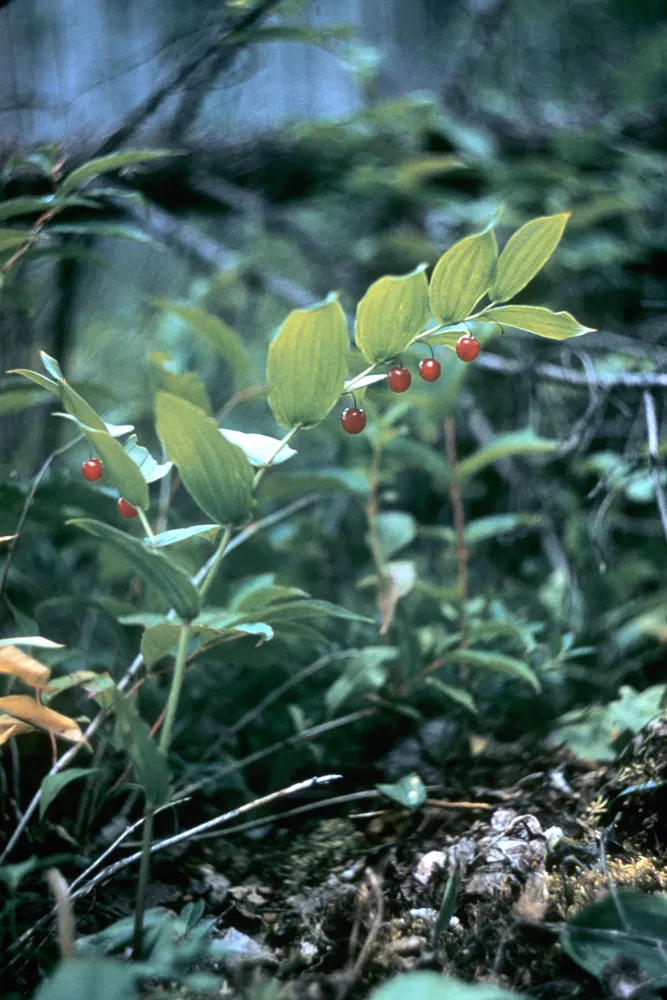
Photo: WayneRay, Public domain (via Wikimedia Commons)
Rosy Twistedstalk
Streptopus lanceolatus
Also known as Rosybells, Lance-leaved Twistedstalk, Rose Twistedstalk
Key benefits
✦Traditional uses
✦Rosy twistedstalk has never held a prominent place in herbal medicine, but it was quietly known to some Pacific Northwest and Rocky Mountain foraging traditions, where the tender young shoots were occasionally nibbled trailside in early spring, said to carry a faint cucumber-like freshness similar to its cousin, clasping twistedstalk. Its ripe, translucent red berries were sometimes eaten in small numbers, though never relied upon as a staple food. More than a source of sustenance, this plant served as a marker of healthy, undisturbed forest floor, a small sign to those who knew the woods that the soil beneath was rich, shaded, and moist. It remains today a plant admired more for its quiet, hidden beauty than for any established remedy.
How to grow & use it
✦The full apothecary for Rosy Twistedstalk
Traditional remedies and step-by-step preparations, a complete growing guide, and how to harvest, dry, and store it, all unlocked with HerbLens Unlimited.
- ✦Remedies & preparations
- ✦ Growing guide
- ✦Harvest & storage
From under $6 a month. Free plant identifications always included.
- ✦Fiddlehead fern
- ✦Wood sorrel
- ✦Miner's lettuce
- ✦False Solomon's seal shoots
- ✦Solomon's seal shoots
“For the hush of a mossy forest floor, where rosy bells hide beneath the leaves and every stem seems to have twisted its way toward the light.”
The genus name Streptopus comes from the Greek streptos, meaning twisted, and pous, meaning foot, a nod to the sharp little kink in each flower stalk that makes the blossoms swing and hide beneath the leaves like tiny lanterns tucked out of the rain.
Twistedstalk berries have a mild laxative effect and can upset the stomach if eaten in quantity. Correct identification matters, since it grows alongside toxic look-alikes like baneberry and false hellebore.