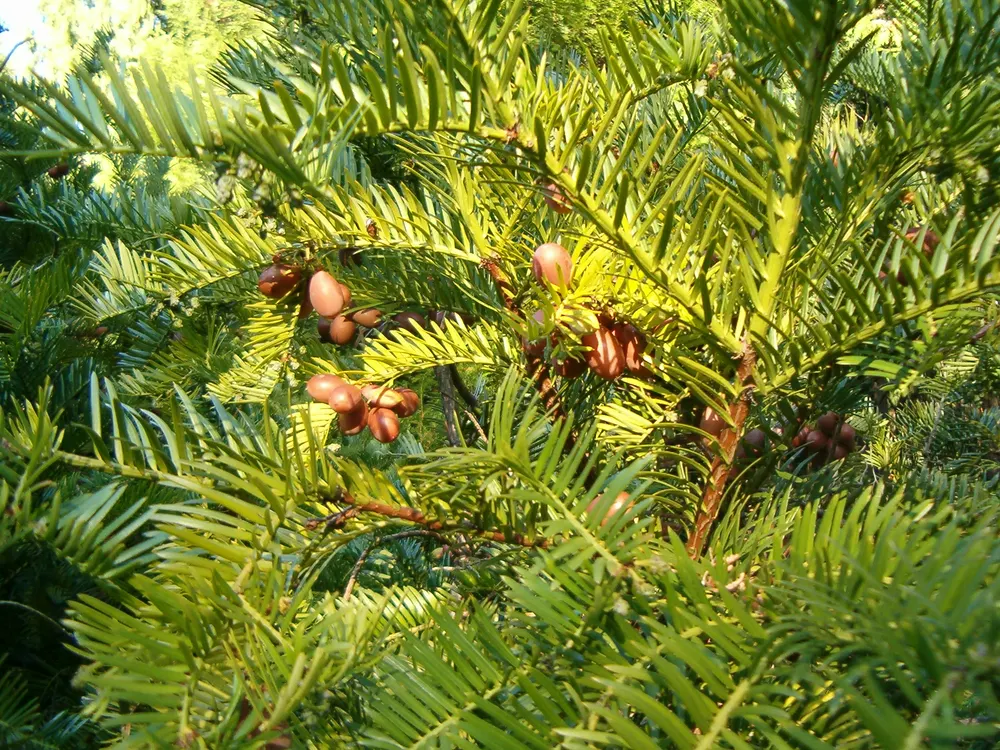
Photo: CC BY-SA 3.0 (via Wikimedia Commons)
Japanese Plum Yew
Cephalotaxus harringtonia
Also known as Japanese Plum Yew, Cow's-tail Pine, Harrington's Plum Yew, Korean Plum Yew
Key benefits
✦Traditional uses
✦Cephalotaxus harringtonia has a long history as a treasured ornamental in Japanese and Chinese gardens, where its soft, glossy needles and tolerance for deep shade made it a favorite for temple grounds and quiet courtyard plantings. It was never a folk medicine in the way that echinacea or chamomile were, prized instead for its calm evergreen presence and its patience under trees where other plants faltered. In the twentieth century, chemists studying the tree's bark and seeds isolated a family of alkaloids, harringtonine and homoharringtonine among them, which decades later became the basis for a modern leukemia medication developed and administered strictly in clinical settings. That thread, from a quiet shade shrub to a hospital pharmacy, is the plant's real legacy rather than any home remedy.
How to grow & use it
✦The full apothecary for Japanese Plum Yew
Traditional remedies and step-by-step preparations, a complete growing guide, and how to harvest, dry, and store it, all unlocked with HerbLens Unlimited.
- ✦Remedies & preparations
- ✦ Growing guide
- ✦Harvest & storage
From under $6 a month. Free plant identifications always included.
- ✦Hosta
- ✦Japanese painted fern
- ✦Azalea
- ✦Podocarpus (for a similar shade-loving evergreen texture)
- ✦Cherry laurel (for dense deer-resistant screening)
“For the shadiest, most deer-plagued corner of the garden, where almost nothing else will hold its ground.”
The alkaloid homoharringtonine, first studied in China from the bark of Cephalotaxus species in the 1970s, was eventually developed into omacetaxine mepesuccinate, an FDA-approved treatment for chronic myeloid leukemia, making this quiet shade shrub an unlikely ancestor of a modern cancer drug.
Every part of Cephalotaxus harringtonia, especially the seeds and the dark, glossy foliage, contains toxic alkaloids (including harringtonine and homoharringtonine) and should never be eaten or brewed at home. Ingestion can cause serious illness, and the fleshy, plum-like seed coating can tempt children and curious pets, so plant it where little hands and paws will not go grazing. These same alkaloids have been isolated and refined under strict pharmaceutical conditions into a leukemia medication, but that is laboratory chemistry, not kitchen herbalism, and nothing about this plant should be gathered, steeped, or ingested on its own. If you have questions about this plant or its history, please speak with a qualified horticulturist, toxicologist, or physician rather than experimenting at home.