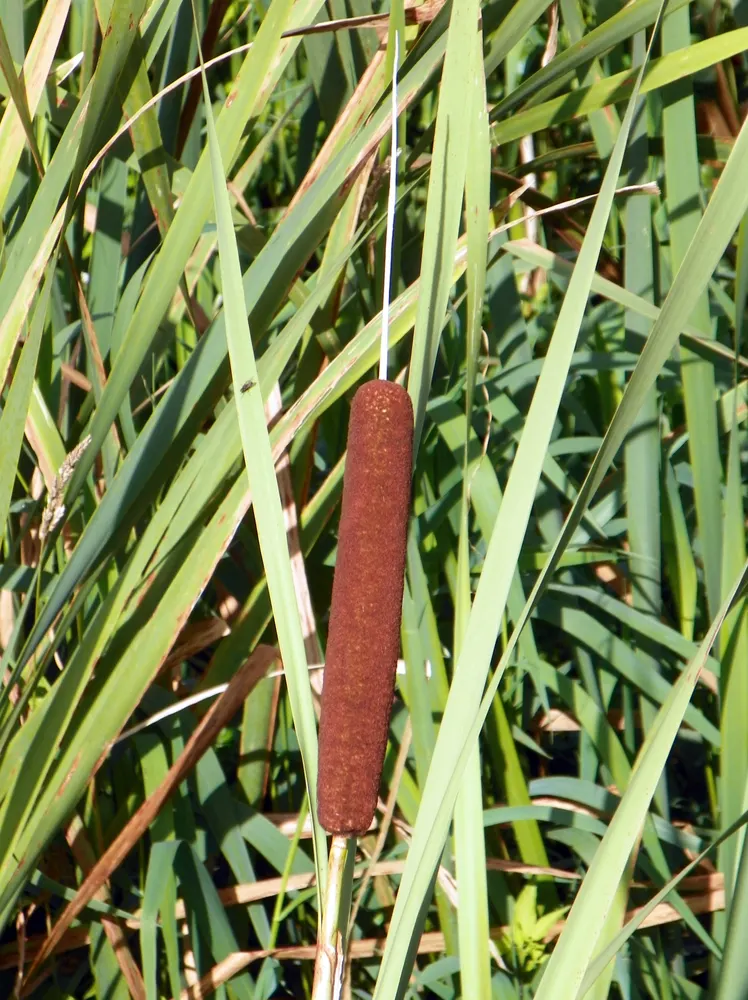
Photo: Peter O'Connor aka anemoneprojectors from Stevenage, United Kingdom, CC BY-SA 2.0 (via Wikimedia Commons)
Broadleaf Cattail
Typha latifolia
Also known as Common Cattail, Bulrush, Reedmace, Cossack Asparagus
Key benefits
✦Traditional uses
✦Cattail was so thoroughly used by Native American nations, from the Ojibwe to the Paiute, that early ethnobotanists called it the supermarket of the swamp. The starchy rhizome was pounded into flour, the young shoots were peeled and eaten like a mild asparagus, and the golden pollen was gathered by the handful to enrich breads and porridges. The soft down packed from the seed heads was tucked around wounds and burns as a gentle, absorbent dressing, and split fresh shoots were pressed directly onto stings and scrapes for their cooling relief. Almost nothing about the plant went unused, from root to fluff.
How to grow & use it
✦The full apothecary for Broadleaf Cattail
Traditional remedies and step-by-step preparations, a complete growing guide, and how to harvest, dry, and store it, all unlocked with HerbLens Unlimited.
- ✦Remedies & preparations
- ✦ Growing guide
- ✦Harvest & storage
From under $6 a month. Free plant identifications always included.
- ✦Plantain
- ✦Comfrey
- ✦Yarrow
- ✦Plantain leaf
- ✦Comfrey leaf
“For the soft dressing gathered at the water's edge, when a scrape needs gentle cover until it heals.”
A single mature cattail seed head can hold as many as 250,000 tiny seeds, each one riding its own tuft of down that once carried it, and later carried Native families' fire-starting kits and baby bedding as well.
Cattail itself is non-toxic, but it draws up pollutants from the water it grows in, so only harvest it from clean, unpolluted wetlands. Be sure of identification, since cattail beds can grow alongside the toxic yellow flag iris.