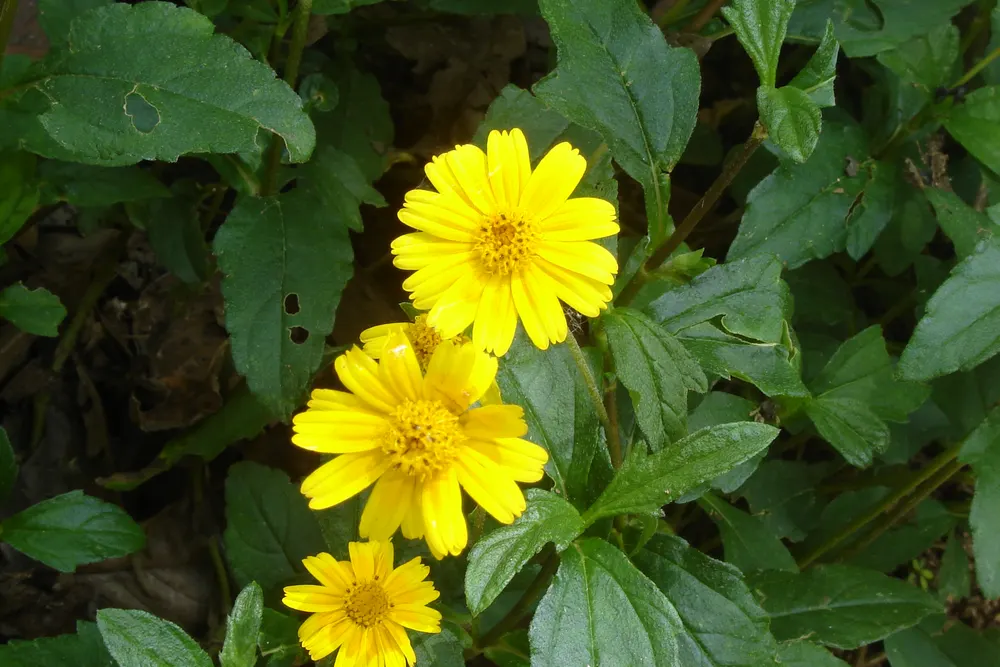
Photo: CC BY-SA 2.5 (via Wikimedia Commons)
Creeping Oxeye
Sphagneticola trilobata
Also known as Wedelia, Trailing Daisy, Singapore Daisy, Yellow Dots, Wedelia trilobata (former name)
Key benefits
✦Traditional uses
✦Long before it carpeted roadsides across the tropics, this scrappy little daisy was a fixture in the home medicine cabinets of the Caribbean, Central America, and Southeast Asia. Healers crushed its leaves into a green paste for bumps, bruises, and aching joints, and in parts of Vietnam and southern China it was steeped into a mild tea for colds, fevers, and sore throats. Its willingness to root wherever it touched soil made it a plant that was always close at hand, tucked at the edge of a dooryard garden or growing wild along a footpath, ready to be picked the moment it was needed.
How to grow & use it
✦The full apothecary for Creeping Oxeye
Traditional remedies and step-by-step preparations, a complete growing guide, and how to harvest, dry, and store it, all unlocked with HerbLens Unlimited.
- ✦Remedies & preparations
- ✦ Growing guide
- ✦Harvest & storage
From under $6 a month. Free plant identifications always included.
- ✦Ginger
- ✦Lemongrass
- ✦Plantain leaf
- ✦Calendula
- ✦Plantain leaf
“For the resilient, sun-loving groundcover that traditional healers once reached for after a hard day's bump or bruise.”
This plant used to travel under the name Wedelia trilobata, and botanists only moved it into the genus Sphagneticola in the 1990s. Its habit of rooting at every single leaf node means one small cutting can carpet a whole hillside in gold within a season, which is exactly why it has become one of the world's most widespread tropical groundcovers, for better or worse.
Creeping oxeye should be avoided during pregnancy and breastfeeding, and anyone allergic to ragweed or other daisy-family plants should patch test before topical use.