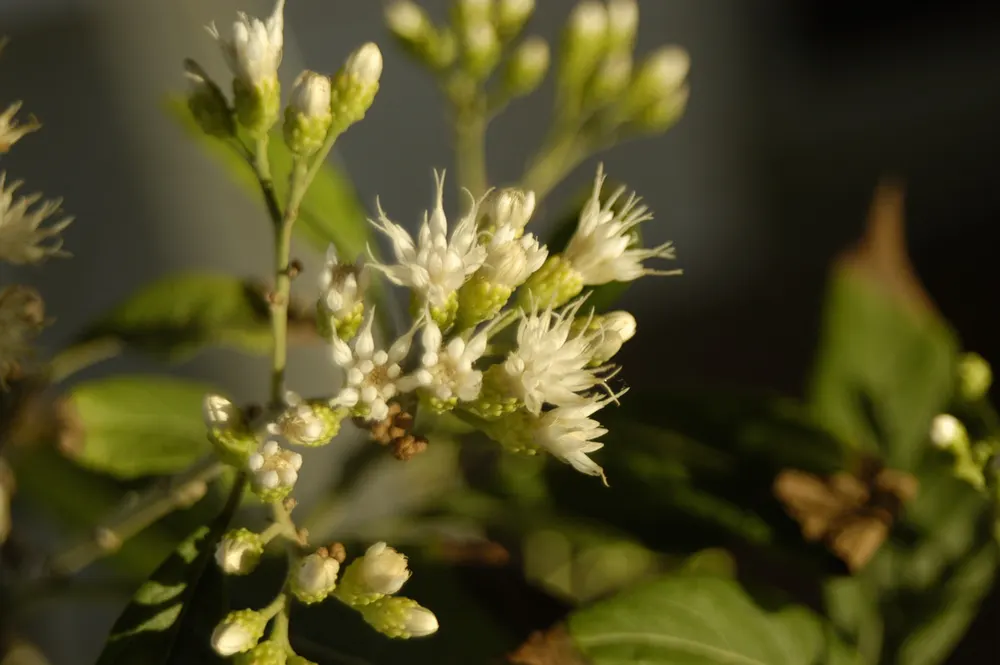
Photo: CostaPPPR, CC BY 3.0 (via Wikimedia Commons)
Brazilian Bitter Leaf
Vernonia condensata
Also known as Seis-em-um (Six-in-One), Boldo Baiano, Alumã, Brazilian Elixir, Bitter Leaf
Key benefits
✦Traditional uses
✦In Brazilian home herbalism, this shrub earned the nickname seis-em-um, or six-in-one, for the sheer number of complaints a single bitter leaf was said to ease, from upset stomachs to sluggish livers to sore throats. Cooks and healers in Bahia and beyond have long kept a plant by the kitchen door, plucking a leaf to chew or steep whenever digestion needed a nudge. Its intense, penetrating bitterness was traditionally read as a sign of its medicine, the same way a bitter aperitif was thought to wake up a tired appetite. Crushed fresh leaves were also pressed onto cuts, bruises, and insect bites as a simple green first-aid poultice passed down through generations.
Growing guide
✦Fresh to dried
✦Traditional preparations
✦Bitter Leaf Tea
The classic preparation, traditionally sipped before meals to encourage digestion or taken at the first sign of a stomach upset.
How it's made. Traditionally, a tea is made by steeping 2 to 3 fresh leaves, torn to release their oils, or 1 teaspoon of crumbled dried leaf, in 250 ml of just-boiled water for 8 to 10 minutes. Strain and sip slowly, in small cups, as the flavor is quite bitter.
Fresh Leaf Poultice
A simple first-aid preparation passed down in Brazilian households for minor skin troubles.
How it's made. Traditionally, one or two fresh leaves are rinsed, gently crushed between the fingers to release their juices, and pressed directly against a clean minor cut, bruise, or insect bite for a few minutes.
- ✦Lemongrass
- ✦Fresh ginger
- ✦Carqueja
- ✦Vernonia amygdalina (African bitter leaf)
- ✦Boldo (Peumus boldus)
“When your stomach is sluggish and needs a good, honest, bitter wake-up call.”
This shrub so rarely flowers or sets seed in cultivation that gardeners around the world have propagated it almost entirely from cuttings passed hand to hand, meaning many plants growing today, oceans apart, may be genetic clones of a single original mother plant.
Its bitter compounds may lower blood sugar, so anyone on diabetes medication should monitor levels closely. Avoid during pregnancy and breastfeeding, and patch test before topical use, since the fresh sap can irritate sensitive skin.