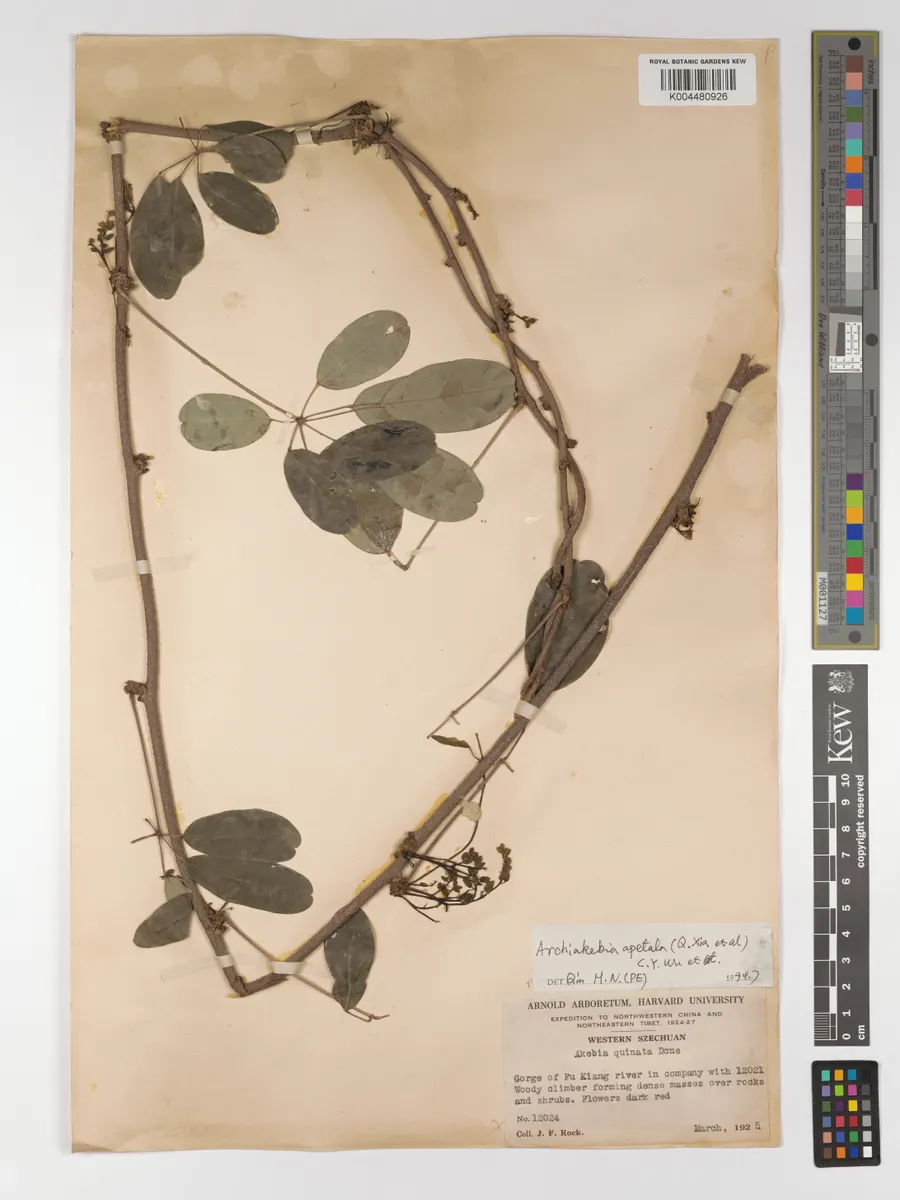
Photo: Royal Botanic Gardens, Kew, CC BY (via GBIF)
Petal-less Akebia
Archakebia apetala
Also known as Apetalous Akebia Vine, Archakebia
Key benefits
✦Traditional uses
✦Archakebia apetala is one of the lesser known members of the akebia family, a quiet cousin to the far more famous chocolate vine, Akebia quinata. Unlike Akebia, which has a long history in East Asian gardens and appears now and then in traditional Chinese medicine, Archakebia apetala does not turn up in the historical herbal record with any well documented use of its own. It has mostly lived its life as a botanist's plant, pressed onto herbarium sheets and described in taxonomic papers rather than steeped in a teapot or planted along a garden fence. Its story, so far, is one of quiet distinction within a well loved family rather than a place in the apothecary.
How to grow & use it
✦The full apothecary for Petal-less Akebia
Traditional remedies and step-by-step preparations, a complete growing guide, and how to harvest, dry, and store it, all unlocked with HerbLens Unlimited.
- ✦Remedies & preparations
- ✦ Growing guide
- ✦Harvest & storage
From under $6 a month. Free plant identifications always included.
- ✦Akebia quinata (chocolate vine)
- ✦Clematis
- ✦Climbing hydrangea
- ✦Akebia quinata
- ✦Holboellia coriacea
“For the quiet, shaded corners of a garden where a lesser known woodland vine is left to do its slow climbing, without any expectation beyond its own good company.”
The genus name Archakebia comes from the Greek arche, meaning original or ancient, hinting that botanists saw this vine as an early or archaic relative standing apart from the akebia vines we know in gardens today. Its species name, apetala, simply means without petals, a fitting label since even its petal-like sepals, the feature that gives related vines their soft color, are reduced almost to nothing here.
No safety data exists for this species, so it should not be ingested or applied. Related "mu tong" herbal products have at times been dangerously mislabeled with Aristolochia species containing aristolochic acid, a known kidney toxin and carcinogen, so only properly identified material should ever be considered.