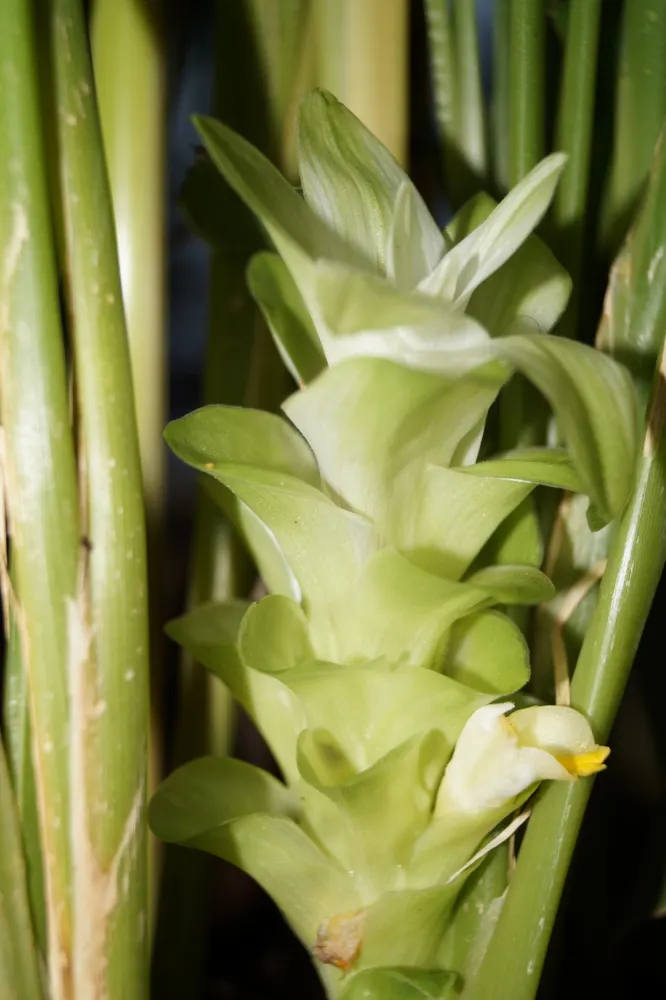
Photo: SKsiddhartthan, CC BY-SA 4.0 (via Wikimedia Commons)
Turmeric
Curcuma longa
Also known as Indian Saffron, Haldi, Golden Spice, Curcuma
Key benefits
✦Traditional uses
✦Turmeric has been at the heart of Indian kitchens and apothecaries for more than four thousand years, ground fresh from the rhizome into curries, milk tonics, and ceremonial pastes. In Ayurvedic and Traditional Chinese Medicine, it was traditionally used to ease joint stiffness, calm the digestion, and support the liver, and it was rubbed on the skin of brides and infants alike as a mark of protection and good fortune. Long before science isolated curcumin, healers simply knew this golden root as something the body welcomed, a spice worth stirring into nearly every remedy on the shelf.
How to grow & use it
✦The full apothecary for Turmeric
Traditional remedies and step-by-step preparations, a complete growing guide, and how to harvest, dry, and store it, all unlocked with HerbLens Unlimited.
- ✦Remedies & preparations
- ✦ Growing guide
- ✦Harvest & storage
From under $6 a month. Free plant identifications always included.
- ✦Black pepper
- ✦Ginger
- ✦Cinnamon
- ✦Saffron (for color, in a pinch)
- ✦Ginger (for warmth, though flavor differs)
“Reach for turmeric when the season calls for warmth, gold, and a little quiet fire in the pot.”
A pinch of black pepper isn't just tradition. Piperine, the compound that gives pepper its bite, has been shown to dramatically boost the body's absorption of curcumin, which may be exactly why cooks across Asia have paired the two spices for centuries without knowing why.
Turmeric is safe in cooking amounts. Concentrated supplements are different: high doses may thin the blood, worsen gallstones, contribute to kidney stones, or reduce iron absorption from meals, so use caution with blood thinners or a history of stones. Culinary use in pregnancy is fine, but skip high-dose supplements.