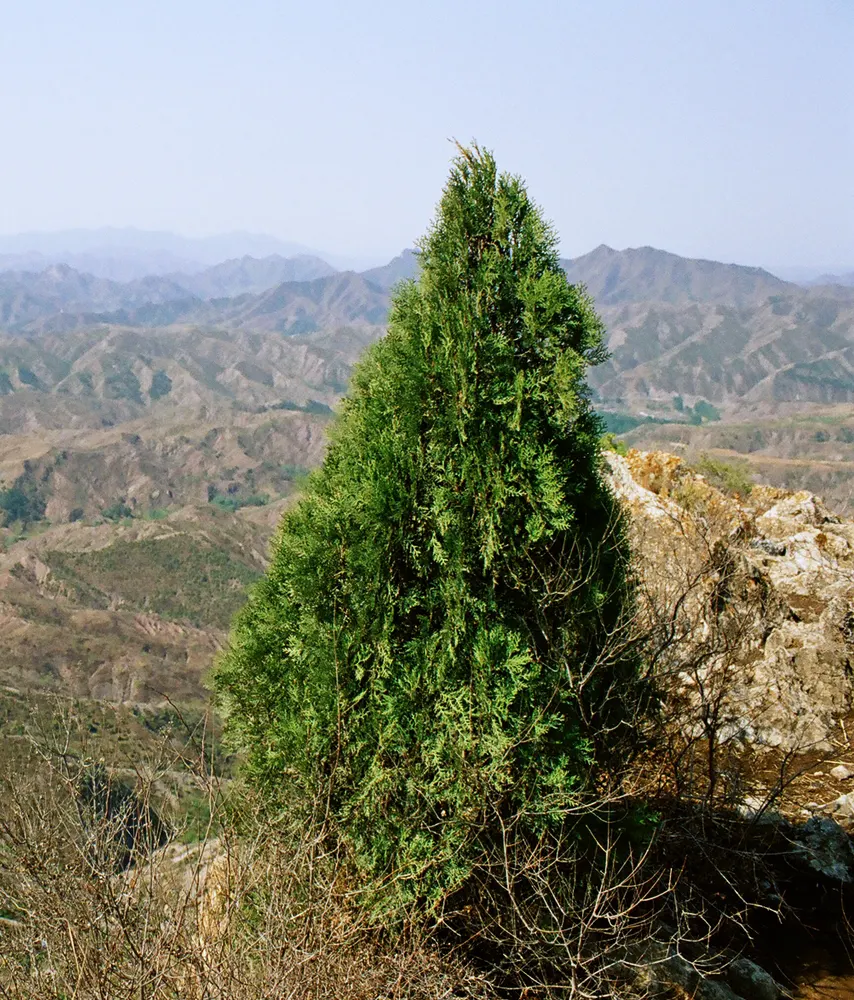
Photo: yeowatzup at Flickr, CC BY 2.0 (via Wikimedia Commons)
Oriental Arborvitae
Thuja orientalis
Also known as Chinese Arborvitae, Biota, Oriental Thuja, Ce Bai (Chinese), Platycladus orientalis
Key benefits
✦Traditional uses
✦Long before it was a hedge plant in Western gardens, Thuja orientalis stood watch over temples, monasteries, and ancestral graves across China and Korea, prized for its unwavering green presence through every season and its reputation for extraordinary long life, with some temple specimens now documented at well over a thousand years old. In classical Chinese medicine the seed, known as Bai Zi Ren, and the leafy shoot, known as Ce Bai Ye, held recognized places in the old pharmacopoeia, the seed associated with calming a restless spirit and easing sleeplessness, the leaf associated with cooling the blood. That tradition existed alongside a clear awareness that the plant's resin and oil were potent and required real skill to use safely, which is why it never became a casual kitchen or home remedy the way gentler herbs did. Today its enduring value is almost entirely as a living monument in the landscape rather than as something to steep or swallow.
How to grow & use it
✦The full apothecary for Oriental Arborvitae
Traditional remedies and step-by-step preparations, a complete growing guide, and how to harvest, dry, and store it, all unlocked with HerbLens Unlimited.
- ✦Remedies & preparations
- ✦ Growing guide
- ✦Harvest & storage
From under $6 a month. Free plant identifications always included.
- ✦Boxwood
- ✦Juniper
- ✦Holly
- ✦Thuja occidentalis (American Arborvitae)
- ✦Leyland Cypress
Some Thuja orientalis specimens still growing at old Chinese temples are believed to be well over a thousand years old, with local legend attaching a few of the most famous ones to emperors and sages who are said to have planted them by hand.
Every part of Thuja orientalis contains thujone and related volatile oils that are toxic if eaten in any real quantity, and the concentrated essential oil is especially dangerous, capable of causing vomiting, convulsions, and seizures. The plant carries a long history as an abortifacient in old herbal practice, meaning it was traditionally used to end pregnancy, a use that reflects real toxicity rather than a safe remedy, so it should never be taken during pregnancy or at any time by anyone hoping for a gentle home remedy. Handling the fresh foliage can also irritate skin for sensitive people. Because of this, no home preparations or doses are given here. Please do not attempt to ingest any part of this plant, and speak with a qualified herbalist, physician, or poison control resource before considering it for any purpose beyond admiring it in the garden.