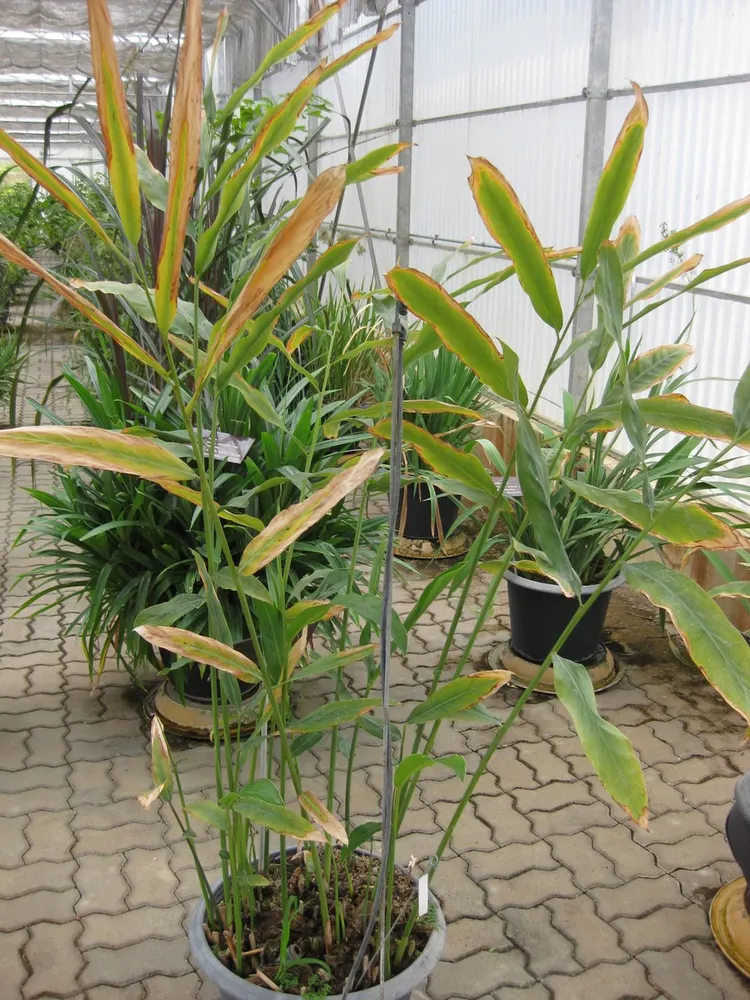
Photo: Raffi Kojian, CC BY-SA 3.0 (via Wikimedia Commons)
Greater Galangal
Alpinia galanga
Also known as Thai Ginger, Siamese Ginger, Lengkuas, Kha, Laos Root
Key benefits
✦Traditional uses
✦Greater galangal has flavored and fortified the kitchens and medicine chests of Southeast Asia for centuries, prized in both Ayurvedic and Traditional Chinese medicine long before it traveled west along the spice routes. Thai, Indonesian, and Vietnamese cooks have always known it as the peppery, pine-scented backbone of dishes like tom kha gai, while traditional healers reached for the rhizome to settle an uneasy stomach, warm a chilled body, and calm coughs and congestion. Arab traders carried it into medieval Europe, where it was once valued as highly as pepper and ginger, showing up in old herbals as a remedy for cold, damp complaints of every kind.
How to grow & use it
✦The full apothecary for Greater Galangal
Traditional remedies and step-by-step preparations, a complete growing guide, and how to harvest, dry, and store it, all unlocked with HerbLens Unlimited.
- ✦Remedies & preparations
- ✦ Growing guide
- ✦Harvest & storage
From under $6 a month. Free plant identifications always included.
- ✦Ginger
- ✦Lemongrass
- ✦Kaffir Lime Leaf
- ✦Fresh Ginger
- ✦Lesser Galangal (Alpinia officinarum)
“When a pot, or a body, needs a little peppery warmth to wake it up.”
In Thailand galangal is called kha, and it is the defining aromatic in tom kha gai, the beloved coconut chicken soup; swap it for ginger and the dish loses the very thing that makes it tom kha.
Galangal is safe as a culinary spice; concentrated medicinal doses may thin the blood, so use caution if taking anticoagulant medication.