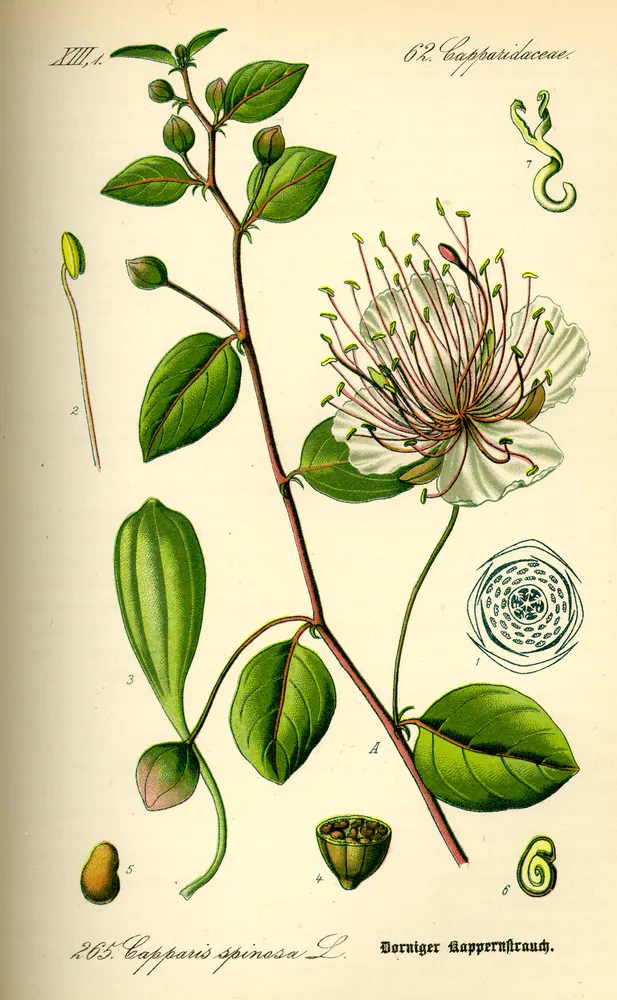
Photo: Otto Wilhelm Thomé (1840-1925), Public domain (via Wikimedia Commons)
Caper Bush
Capparis spinosa
Also known as Caper, Flinders Rose, Câprier
Key benefits
✦Traditional uses
✦Long before the caper became a pantry staple, it was a plant of the dry Mediterranean and Middle Eastern hillsides, clinging to cracks in old stone walls where little else would grow. Ancient Greek and Roman cooks pickled its tight little flower buds in brine and vinegar, prizing them as an appetite-sharpening relish before meals. In traditional Mediterranean, Unani, and North African herbal practice, the root bark was simmered into bitter decoctions thought to ease digestion, support the liver, and calm the aches of rheumatism and gout. It has always straddled the line between kitchen and medicine cabinet, a plant grown as much for flavor as for folklore.
How to grow & use it
✦The full apothecary for Caper Bush
Traditional remedies and step-by-step preparations, a complete growing guide, and how to harvest, dry, and store it, all unlocked with HerbLens Unlimited.
- ✦Remedies & preparations
- ✦ Growing guide
- ✦Harvest & storage
From under $6 a month. Free plant identifications always included.
- ✦Lemon
- ✦Oregano
- ✦Dandelion greens
- ✦Pickled nasturtium buds
- ✦Chopped green olives
“For the bright, briny bite that wakes up a dish, borrowed from centuries of Mediterranean sun and stone.”
The capers found in jars at the market are simply the plant's unopened flower buds, hand-picked at dawn. Left alone, each bud unfurls into a papery white flower with a dramatic burst of long purple stamens that lasts only a single day.
Capers eaten as a culinary condiment are safe for most people. Medicinal amounts of the root bark aren't well studied, may affect blood sugar or blood thinning, and are best avoided during pregnancy.