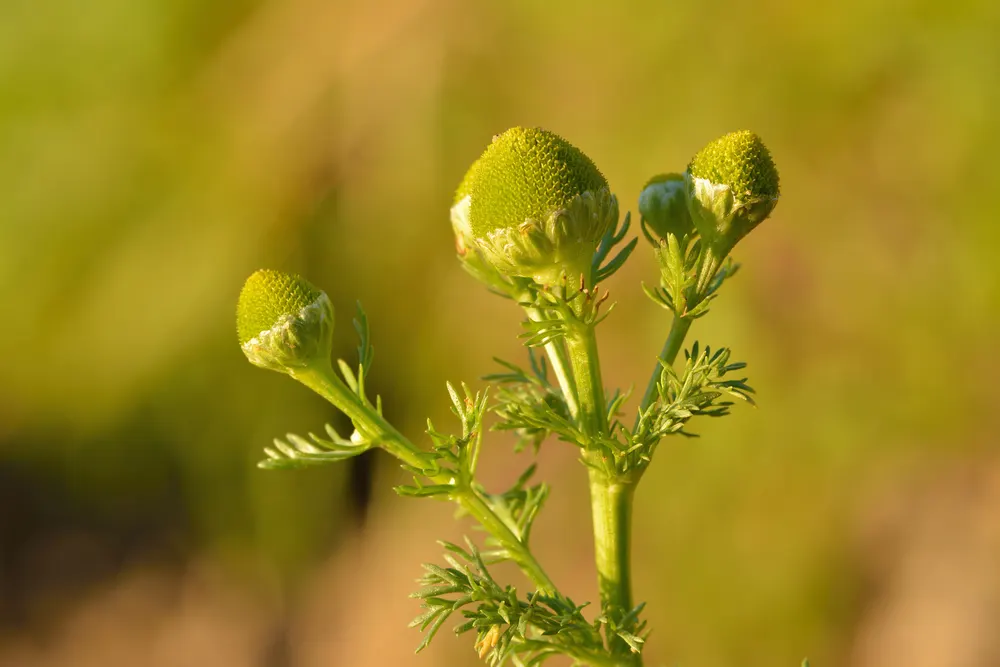
Photo: Ivar Leidus, CC BY-SA 3.0 (via Wikimedia Commons)
Pineapple Weed
Matricaria discoidea
Also known as Wild Chamomile, Disc Mayweed, Rayless Chamomile
Key benefits
✦Traditional uses
✦Long before it earned the name pineapple weed, this humble little plant was gathered by Indigenous peoples across North America, who steeped its flower heads into a mild tea for upset stomachs, colds, and to soothe restless babies. Because it grows so readily along paths and dooryards where true chamomile does not, it became a trusted stand-in wherever German or Roman chamomile was scarce. Settlers and homesteaders carried on the tradition, prizing it as a gentle, everyday remedy that needed no garden at all, just a well-worn footpath and a patient nose for its fruity scent.
How to grow & use it
✦The full apothecary for Pineapple Weed
Traditional remedies and step-by-step preparations, a complete growing guide, and how to harvest, dry, and store it, all unlocked with HerbLens Unlimited.
- ✦Remedies & preparations
- ✦ Growing guide
- ✦Harvest & storage
From under $6 a month. Free plant identifications always included.
- ✦Chamomile
- ✦Peppermint
- ✦Lemon balm
- ✦German chamomile
- ✦Roman chamomile
“For the gentlest cup on the shelf, the little roadside chamomile that smells like sunshine on fruit.”
Pineapple weed has no white petals at all. What looks like a plain yellow-green button is actually just the domed center that a daisy or true chamomile would wear, which is why old field guides sometimes call it disc mayweed.
Pineapple weed is part of the daisy family, so those allergic to ragweed, chrysanthemums, or daisies should be cautious of cross-reactivity. Like chamomile, it has traditionally been avoided in large medicinal amounts during pregnancy.