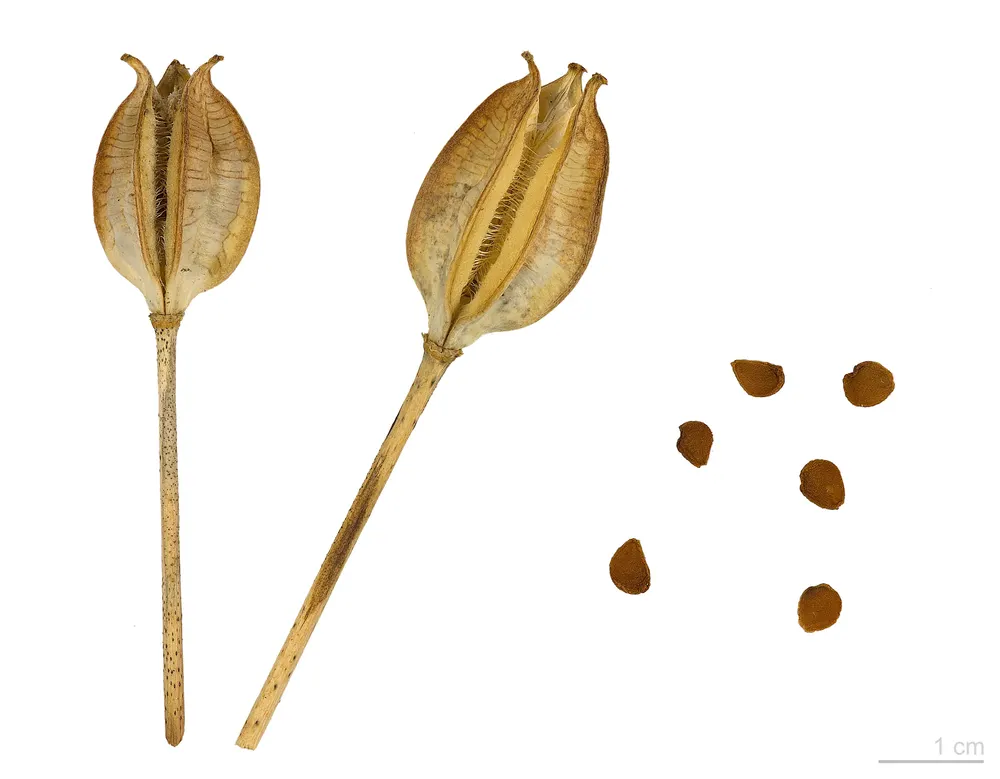
Photo: Roger Culos, CC BY-SA 3.0 (via Wikimedia Commons)
Wild Tulip
Tulipa sylvestris
Also known as Woodland Tulip, Wood Tulip, Fragrant Tulip
Key benefits
✦Traditional uses
✦Wild tulip is thought to have arrived in Britain and northern Europe long ago, planted in monastery gardens and old manor grounds before slipping quietly out into the surrounding orchards and meadows where it still turns up today. Unlike the flamboyant cultivated tulips bred during the Dutch tulip mania, this slender, sweetly scented yellow species was never prized for spectacle so much as for the honest cheer it brought to a cold April orchard. Old orchard keepers came to read its nodding heads as a small seasonal clock, a sign that the fruit trees would soon be in blossom themselves. In folk memory it survives less as a healing plant and more as a quiet marker of very old ground, its scattered colonies often hinting that a garden, abbey, or farmstead once stood nearby centuries before.
How to grow & use it
✦The full apothecary for Wild Tulip
Traditional remedies and step-by-step preparations, a complete growing guide, and how to harvest, dry, and store it, all unlocked with HerbLens Unlimited.
- ✦Remedies & preparations
- ✦ Growing guide
- ✦Harvest & storage
From under $6 a month. Free plant identifications always included.
- ✦Daffodils (Narcissus)
- ✦Grape hyacinth (Muscari)
- ✦Fritillaries (Fritillaria)
- ✦Tulipa clusiana (lady tulip)
- ✦Tulipa turkestanica
“For the hush of an old orchard in April, when the grass is still cool and a handful of pale yellow heads are nodding before the blossom starts.”
Many wild tulip colonies spread for decades entirely underground by bulb offsets without ever producing a single flower, so a patch of leaves you find in an old orchard could be centuries old and still waiting to bloom.
All parts of Tulipa sylvestris, especially the bulb, contain tuliposide compounds that break down into tulipalin A, a known skin and mucous-membrane irritant. Handling the bulbs or sap is a well documented cause of allergic contact dermatitis in gardeners and flower growers, an occupational condition long nicknamed "tulip fingers." The bulbs are toxic if eaten and have caused nausea, vomiting, and irritation of the mouth and throat in people who mistook them for onions or shallots, and they are also dangerous to cats, dogs, and horses. Wild tulip has no established tradition of internal use and should never be brewed as a tea, taken as a tincture, or treated as food. Wear gloves when handling bulbs, keep them well away from children, pets, and kitchen stores, and speak with a doctor, vet, or dermatologist if any exposure causes a reaction.