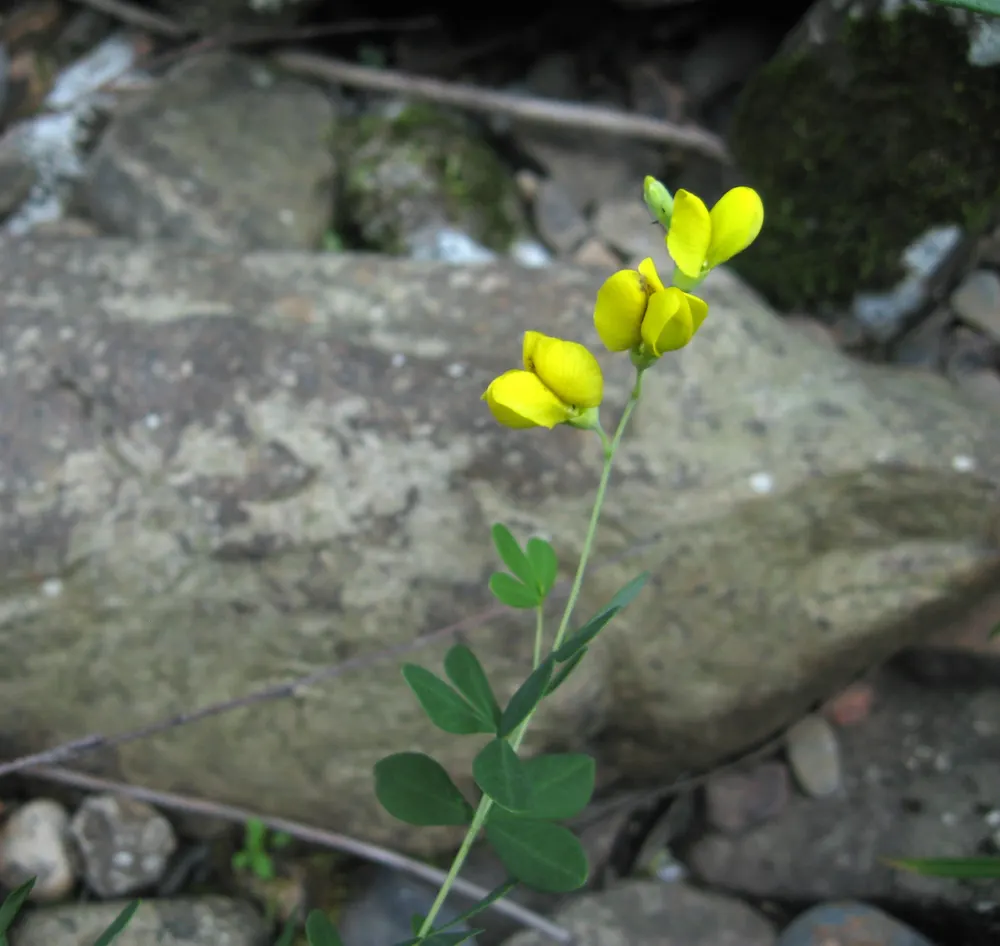
Photo: Mason Brock (Masebrock), Public domain (via Wikimedia Commons)
Wild Indigo
Baptisia tinctoria
Also known as Yellow Wild Indigo, Horseflyweed, Indigo Weed, Rattlebush, American Indigo
Key benefits
✦Traditional uses
✦Long before it had a place in any pharmacy, wild indigo grew quietly across the dry prairies and open woods of eastern North America, its cheerful yellow, pea-like blooms belying a root with a serious reputation. Native American communities and, later, the Eclectic physicians of the 1800s turned to the root as a strong alterative, reaching for it in low, lingering fevers and as a wash for stubborn wounds, mouth sores, and skin troubles. It earned a name among herbalists as a plant of last resort for sluggish, 'septic' conditions, respected precisely because it was considered too potent for casual, everyday use. That old caution has carried forward, and wild indigo today remains a plant defined more by its history in professional hands than by any home remedy.
How to grow & use it
✦The full apothecary for Wild Indigo
Traditional remedies and step-by-step preparations, a complete growing guide, and how to harvest, dry, and store it, all unlocked with HerbLens Unlimited.
- ✦Remedies & preparations
- ✦ Growing guide
- ✦Harvest & storage
From under $6 a month. Free plant identifications always included.
- ✦Echinacea
- ✦Myrrh
- ✦Goldenseal
- ✦Echinacea
- ✦Oregon grape root
“A plant to admire in the meadow and respect in the apothecary, not to steep in a Sunday cup.”
Nineteenth-century Eclectic physicians in America prized wild indigo root as one of their signature 'antiseptic' remedies for low, septic-feeling fevers, and its species name tinctoria remembers an even older use: colonists and Native peoples once simmered the plant down for a blue dye when true indigo was scarce.
Wild indigo root's alkaloids can cause vomiting, diarrhea, and other signs of toxicity in excess, and overdose brings on strong purgative effects. It is not for casual self-dosing, pregnancy, breastfeeding, or children, and any internal use should be guided by an experienced herbalist.