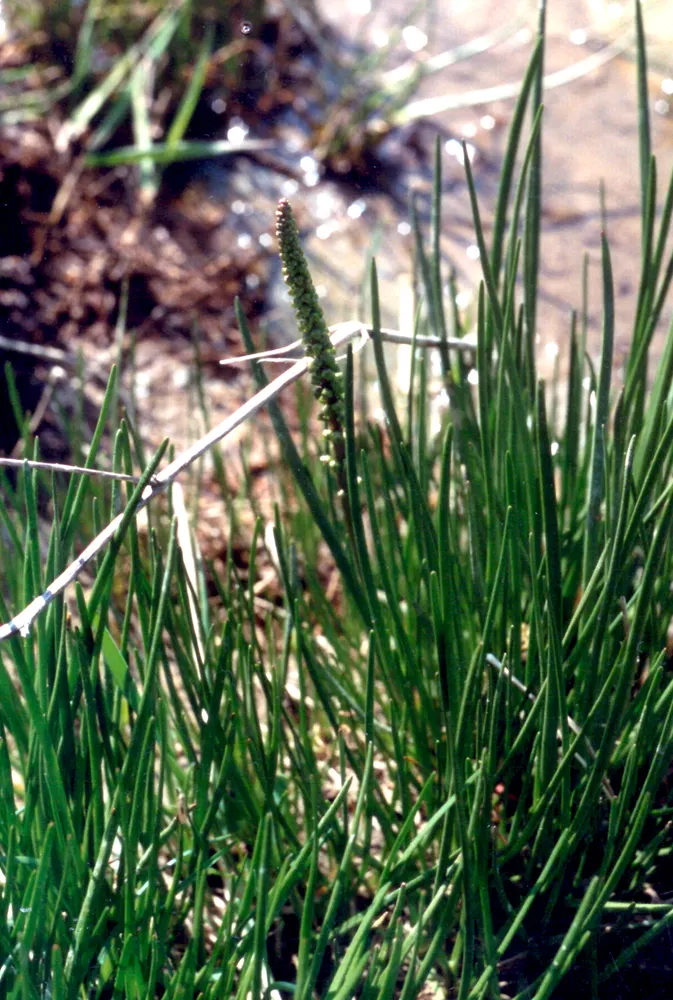
Photo: Elke Freese, CC BY 2.5 (via Wikimedia Commons)
Seaside Arrowgrass
Triglochin maritima
Also known as Sea Arrowgrass, Shore Arrowgrass, Arrow Grass, Seaside Arrow-grass
Key benefits
✦Traditional uses
✦Seaside arrowgrass has come down through history less as a plant that was used and more as a plant that had to be recognized and avoided. Its grass-like leaves once made it a quiet hazard in coastal hay meadows and salt marsh pastures, where ranchers learned through hard experience to watch their cattle and sheep around it. In parts of the circumpolar north, some Indigenous communities are recorded to have eaten small, carefully prepared amounts of the boiled rhizome base during times of scarcity, though this was never treated as a reliable or safe food source. For the most part, arrowgrass survives in the old record as a caution handed down through generations of herders and naturalists rather than as an herb gathered for the table or the medicine chest.
How to grow & use it
✦The full apothecary for Seaside Arrowgrass
Traditional remedies and step-by-step preparations, a complete growing guide, and how to harvest, dry, and store it, all unlocked with HerbLens Unlimited.
- ✦Remedies & preparations
- ✦ Growing guide
- ✦Harvest & storage
From under $6 a month. Free plant identifications always included.
“A slender sentinel of the salt marsh, best admired at the tideline and never gathered for the table.”
Seaside arrowgrass is one of the few marsh plants known to concentrate cyanide-forming compounds (called cyanogenic glycosides) in its leaves, and this defense becomes most dangerous exactly when the plant is wilting, frosted, or cut, which is why old-time ranchers feared it most after a hard frost or in cured hay.
Seaside arrowgrass contains cyanogenic glycosides, notably triglochinin, which release toxic hydrocyanic acid (cyanide) when the plant's tissue is crushed, wilted, frosted, or cut, a process known as cyanogenesis. It is a well-documented cause of poisoning and death in cattle, sheep, and other grazing animals, particularly when they eat drought-stressed, frost-damaged, or hay-cut plants, and symptoms of cyanide poisoning can appear within minutes and be fatal without prompt veterinary care. Because of this risk, arrowgrass is not considered safe for human consumption in any form, fresh or dried, and it has no established place in home herbalism or traditional remedies today. If you are exploring coastal marshes, learn to identify and avoid this plant, keep grazing animals well away from it, and seek immediate medical or veterinary attention if ingestion by a person or animal is suspected. Always consult a qualified professional, such as a physician, veterinarian, or poison control center, rather than attempting any home preparation with this plant.