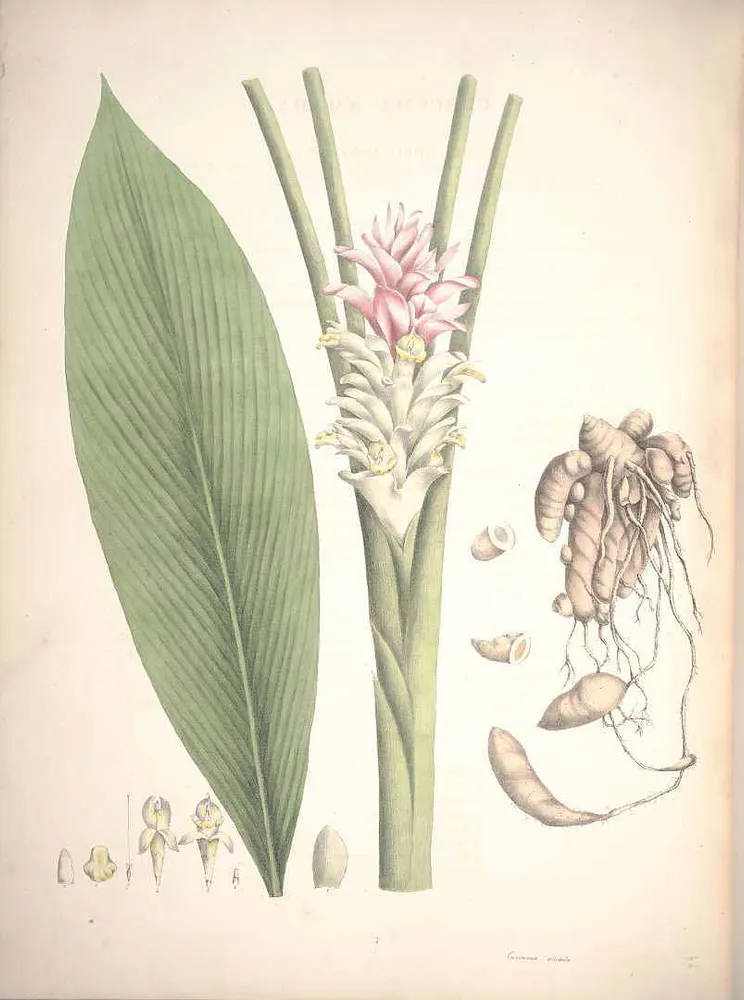
Photo: William Roscoe, Public domain (via Wikimedia Commons)
Mango Ginger
Curcuma amada
Also known as Amba Haldi, Amra Haldi, Green Mango Ginger
Key benefits
✦Traditional uses
✦Mango ginger has been tucked into the kitchens and medicine cabinets of South Asia for generations, prized in Ayurvedic tradition for its cooling, digestive nature even as its knobby rhizome looks nearly identical to common ginger. Cooks have long turned it into pickles, chutneys, and relishes meant to be eaten alongside rich meals, valued for settling a heavy stomach. Traditional healers also reached for a fresh paste of the rhizome to calm skin irritation, bruises, and minor aches, treating it much like a gentler cousin to turmeric.
How to grow & use it
✦The full apothecary for Mango Ginger
Traditional remedies and step-by-step preparations, a complete growing guide, and how to harvest, dry, and store it, all unlocked with HerbLens Unlimited.
- ✦Remedies & preparations
- ✦ Growing guide
- ✦Harvest & storage
From under $6 a month. Free plant identifications always included.
- ✦Turmeric
- ✦Fresh Ginger
- ✦Tamarind
- ✦Fresh ginger
- ✦Turmeric
“When you want the warmth of ginger's kitchen cousin, carrying the bright, green scent of raw mango instead.”
Despite looking almost exactly like common ginger and sharing its family tree, mango ginger does not smell or taste like ginger at all, it releases the distinct green, tangy scent of raw mango when cut, which is exactly how it earned the name amada, Hindi for mango.
Mango ginger is safe in typical culinary amounts, though large or concentrated amounts may cause mild digestive upset. Those allergic to ginger or turmeric should be cautious, and anyone on blood-thinning medication should be mindful, since related Curcuma species can affect platelet function.