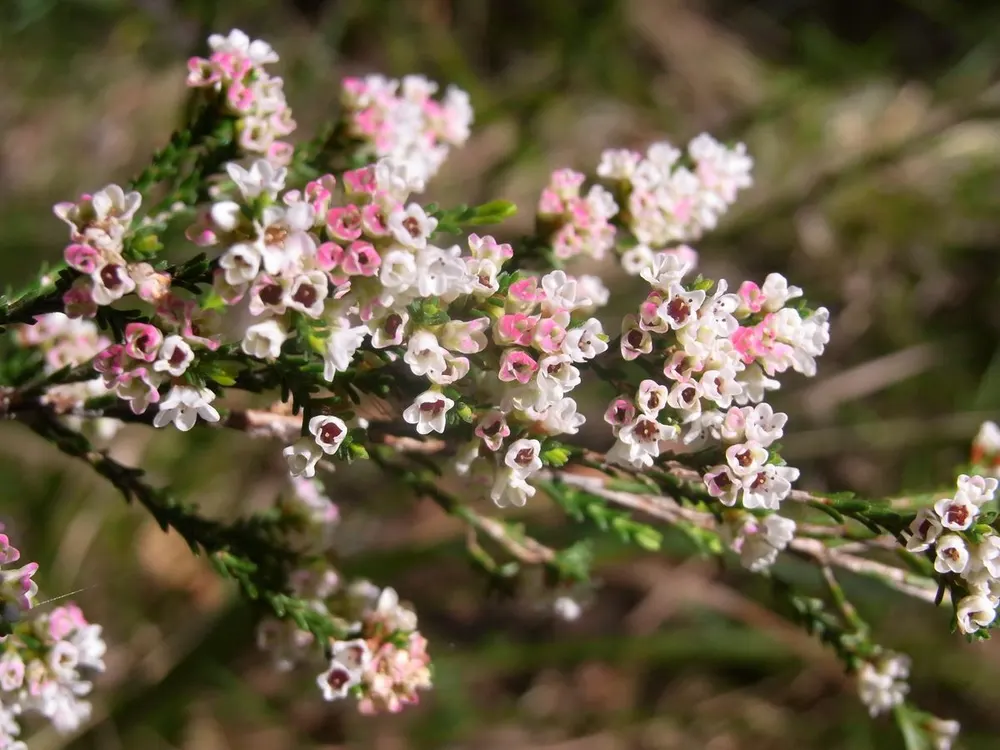
Photo: Poyt448 Peter Woodard, CC BY-SA 3.0 (via Wikimedia Commons)
Fringed Heath-myrtle
Micromyrtus ciliata
Also known as Heath Myrtle
Key benefits
✦Traditional uses
✦Micromyrtus ciliata is a small, wiry shrub scattered through the sandplains, mallee, and heathlands of southern Australia, where it has long been part of the fine-textured understory that holds those dry, sandy landscapes together. Unlike many of its Myrtaceae cousins, it does not carry a documented history of medicinal or culinary use, and it has never found its way into the herbalist's cabinet or the kitchen pantry. Its real value has always been quieter and more ecological: a nectar source for small native bees and insects through the heath, and, in recent decades, a favorite of native-plant gardeners drawn to its fine heath-like form and the haze of tiny star-shaped flowers it wears each spring.
How to grow & use it
✦The full apothecary for Fringed Heath-myrtle
Traditional remedies and step-by-step preparations, a complete growing guide, and how to harvest, dry, and store it, all unlocked with HerbLens Unlimited.
- ✦Remedies & preparations
- ✦ Growing guide
- ✦Harvest & storage
From under $6 a month. Free plant identifications always included.
“For the sun-baked, sandy corner of the garden that wants fine texture and a haze of spring flowers, not a spoonful of medicine.”
The genus name Micromyrtus means 'tiny myrtle,' a nod to how small its leaves and flowers are next to the classic Mediterranean myrtle, while the species name ciliata is Latin for 'fringed with hairs,' describing the tiny eyelash-like cilia that line the edge of each leaf.
This shrub has no history of medicinal or culinary use. Its aromatic foliage oils may irritate skin, stomach, or airways, so it isn't taken internally.