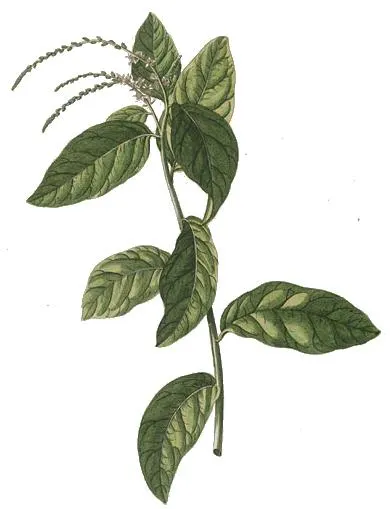
Photo: Public domain (via Wikimedia Commons)
Guinea Hen Weed
Petiveria alliacea
Also known as Anamu, Mucura, Gully Root, Apacin, Tipi
Key benefits
✦Traditional uses
✦Guinea hen weed, better known by its Spanish and Portuguese names anamu and mucura, has long been a fixture of Afro-Caribbean, Central American, and Amazonian home medicine chests. Healers across these traditions have reached for its pungent root and leaf to ease colds, flu, and stubborn infections, and to calm the ache of sore joints and tired muscles. In parts of West Africa, where the plant also grows wild, it carries a similarly deep-rooted reputation as a protective, cleansing herb. Its unmistakable garlic-like, sulfurous smell, which lingers on the breath and skin of anyone who takes it, became so associated with vitality that rural communities often kept a plant growing right by the door.
How to grow & use it
✦The full apothecary for Guinea Hen Weed
Traditional remedies and step-by-step preparations, a complete growing guide, and how to harvest, dry, and store it, all unlocked with HerbLens Unlimited.
- ✦Remedies & preparations
- ✦ Growing guide
- ✦Harvest & storage
From under $6 a month. Free plant identifications always included.
- ✦Ginger
- ✦Turmeric
- ✦Moringa
- ✦Echinacea
- ✦Cat's Claw (Uña de Gato)
“For the days you want your grandmother's remedy: sharp, pungent, and time-tested against the common chill.”
The root's sulfurous, garlic-like scent is so strong that handling it can change the smell of a person's skin and breath for hours afterward. In many Caribbean and Latin American households the whole plant was once hung by the front door, a tradition rooted in the belief that its powerful odor kept illness and misfortune from crossing the threshold.
Avoid during pregnancy and breastfeeding, since it has traditionally been used to bring on menstruation, and use cautiously with blood-thinning medications or before surgery. Its sulfur compounds can cause noticeable body odor.