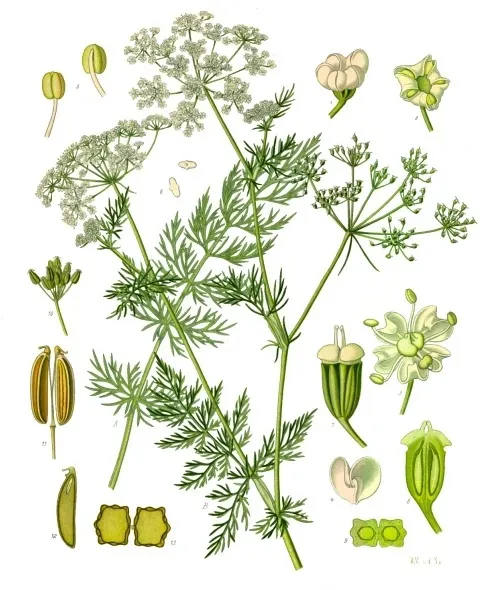
Photo: Franz Eugen Köhler, Köhler's Medizinal-Pflanzen, Public domain (via Wikimedia Commons)
Caraway
Carum carvi
Also known as Meridian fennel, Persian cumin, Wild cumin
Key benefits
✦Traditional uses
✦Caraway seeds have been found tucked among the offerings in Egyptian tombs, a sign of just how long people have leaned on this small, curved seed. Across Central and Northern Europe it became a kitchen staple worked into rye bread, cheeses, and cabbage dishes, and folk healers came to trust it as a gentle after-meal comfort when a heavy dinner sat uneasily. Nursing mothers in old European households were sometimes given caraway tea in the belief it eased a fussy, gassy baby by way of the milk. Its warm, anise-like bite made it as much a fixture of the medicine shelf as the bread board.
How to grow & use it
✦The full apothecary for Caraway
Traditional remedies and step-by-step preparations, a complete growing guide, and how to harvest, dry, and store it, all unlocked with HerbLens Unlimited.
- ✦Remedies & preparations
- ✦ Growing guide
- ✦Harvest & storage
From under $6 a month. Free plant identifications always included.
- ✦Fennel
- ✦Coriander
- ✦Cumin
- ✦Fennel seed
- ✦Cumin seed
“When a meal sits heavy and you want the old, seed-flecked comfort of a bakery shelf to settle it.”
In parts of medieval Germany, caraway was baked into bread or sewn into a pouch and slipped into a sweetheart's pocket, on the folk belief that anything containing caraway, from a loaf to a love, could never be stolen away.
Caraway used as an everyday spice is safe for most people. Concentrated caraway seed oil should be avoided during pregnancy, since high doses may stimulate the uterus, and people allergic to carrot, celery, parsley, or fennel may also react to it.