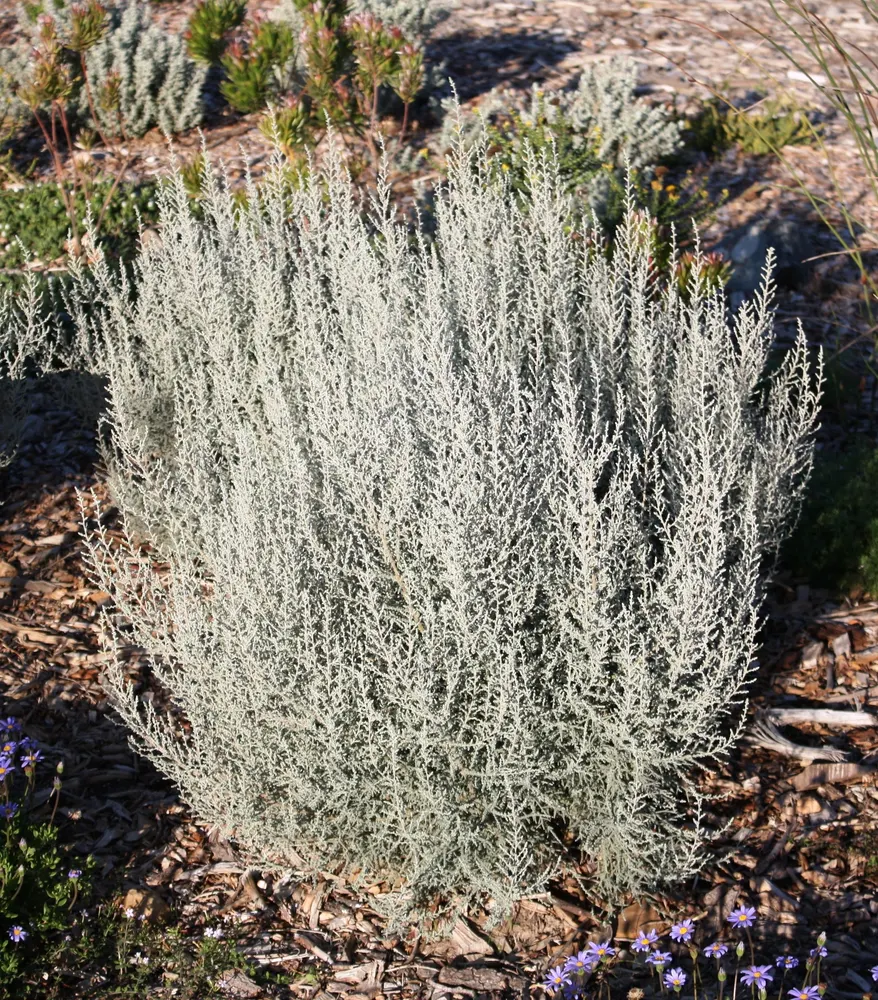
Photo: Abu Shawka, CC0 (via Wikimedia Commons)
Slangbos
Stoebe plumosa
Also known as Slangbossie
Key benefits
✦Traditional uses
✦In the fynbos regions of the Western and Eastern Cape, slangbos has long been gathered in bundles and burned as a household incense, its resinous smoke filling homes with a sharp, herbal scent. Its Afrikaans name means snake bush, a nod to the old folk custom of burning or scattering its branches around dwellings in the belief that the smoke and smell would keep snakes at a distance. Traders and rural households alike came to know it as a humble, always-available plant, one that did not need tending or coin to gather, just a walk into the veld. Today it remains more a plant of memory and household ritual than of the kitchen or medicine cabinet, treasured for its scent and its toughness rather than any proven remedy.
How to grow & use it
✦The full apothecary for Slangbos
Traditional remedies and step-by-step preparations, a complete growing guide, and how to harvest, dry, and store it, all unlocked with HerbLens Unlimited.
- ✦Remedies & preparations
- ✦ Growing guide
- ✦Harvest & storage
From under $6 a month. Free plant identifications always included.
- ✦Buchu (Agathosma betulina)
- ✦Wild rosemary (Eriocephalus africanus)
- ✦Wild rosemary (Eriocephalus africanus)
“For a plant gathered from the wild hillside and burned in the home, the way it always has been, to clear the air and keep the old worries at bay.”
The species name plumosa means feathery, describing the soft, plume-like pappus that crowns each tiny seed, an adaptation that lets the wind carry new slangbos plants across the open fynbos after fire has cleared the ground.
Not established as safe to take by mouth and should not be ingested. Its resin and smoke can irritate sensitive skin, eyes, or airways, so use caution around burning sprigs if you have asthma.