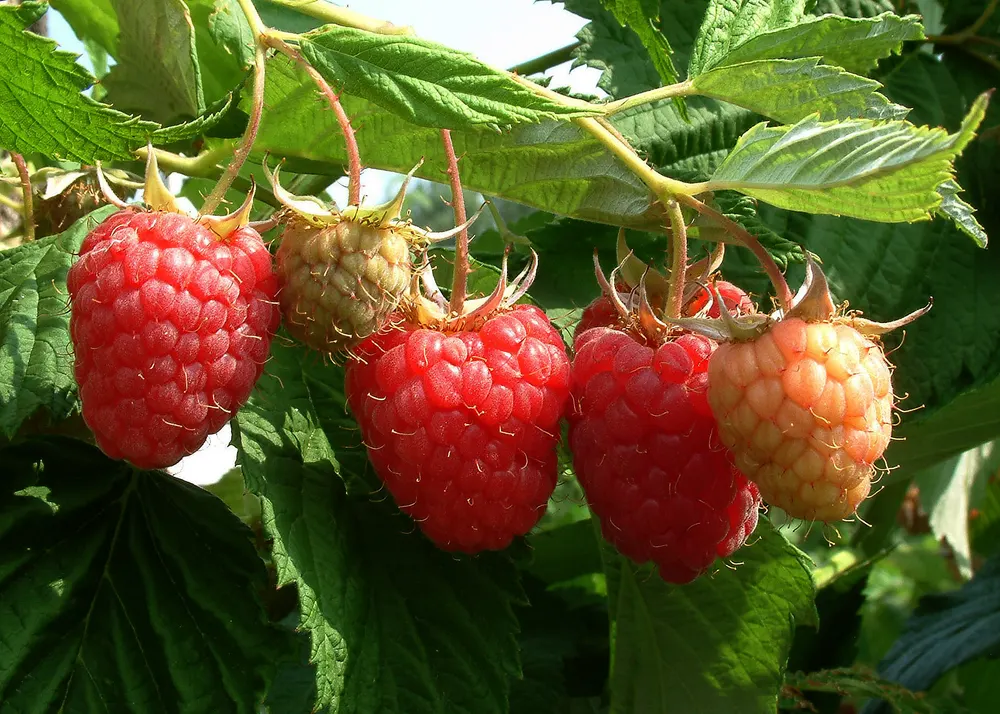
Photo: Kollányi Gábor, CC BY-SA 3.0 (via Wikimedia Commons)
Red Raspberry
Rubus idaeus
Also known as Raspberry Leaf, European Raspberry, Framboise
Key benefits
✦Traditional uses
✦Long before raspberries were prized for their fruit alone, midwives and herbalists across Europe and North America reached for the leaf. Raspberry leaf tea became one of the most widely passed-down remedies among women, brewed as a gentle tonic in the months leading up to childbirth and sipped afterward to help the body recover. Beyond its reputation as a woman's herb, the leaves were also steeped for everyday digestive upset, mouth sores, and scratchy throats, earning raspberry a steady place in the household herb basket long before the fruit itself became a kitchen staple.
How to grow & use it
✦The full apothecary for Red Raspberry
Traditional remedies and step-by-step preparations, a complete growing guide, and how to harvest, dry, and store it, all unlocked with HerbLens Unlimited.
- ✦Remedies & preparations
- ✦ Growing guide
- ✦Harvest & storage
From under $6 a month. Free plant identifications always included.
- ✦Nettle
- ✦Chamomile
- ✦Peppermint
- ✦Nettle leaf
- ✦Alfalfa leaf
“For the steady, grounding cup that generations of women have leaned on.”
Raspberry canes only live for two years each. The first-year cane, called a primocane, stores energy and grows leaves, while it is the second-year floricane that flowers and fruits before dying back, so a single raspberry patch is really two generations of canes growing side by side.
Raspberry leaf is traditionally thought to tone the uterus, so many practitioners advise avoiding it in early pregnancy and reserving it for later stages under a midwife's guidance.