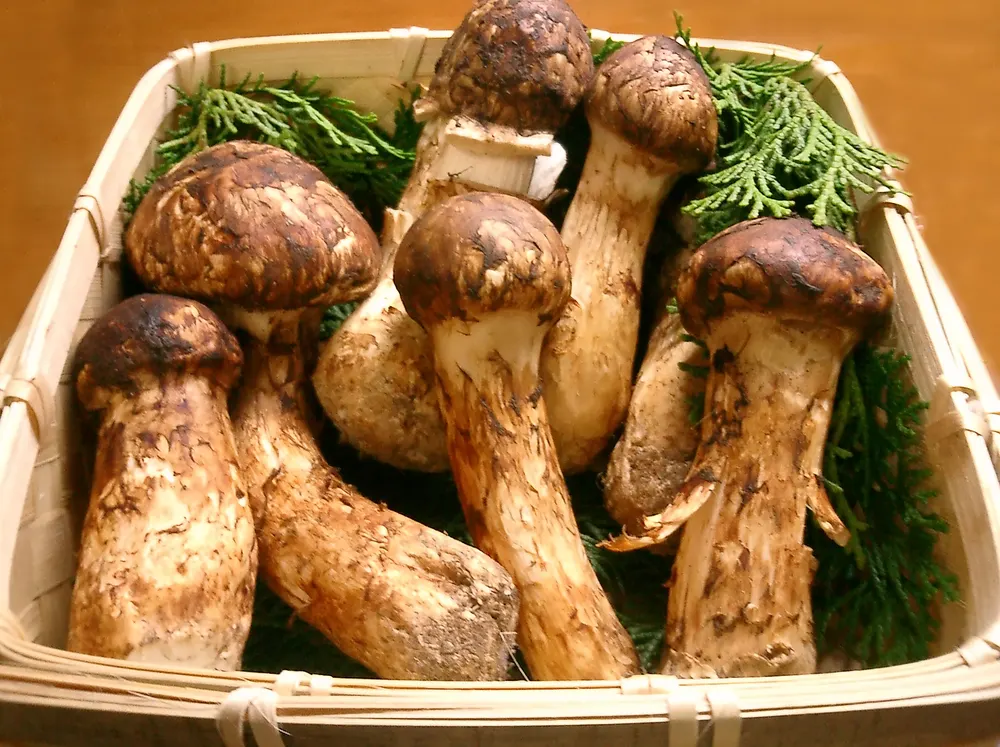
Photo: Tomomarusan, CC BY 2.5 (via Wikimedia Commons)
Matsutake
Tricholoma matsutake
Also known as Pine mushroom, Matsutake mushroom, American matsutake (a related species, T. magnivelare)
Key benefits
✦Traditional uses
✦In Japan, matsutake has been gathered from pine forests for well over a thousand years and welcomed each autumn as a herald of the season, its arrival celebrated in poetry, festivals, and the most special meals a family will cook all year. In traditional Chinese medicine and folk practice, matsutake and other Tricholoma mushrooms were sometimes taken as a restorative tonic, believed to build strength and support the body through the cold months ahead. Because it resists cultivation and grows only where its wild forest partnership allows, matsutake has always carried a sense of scarcity and reverence that few other foods share. It remains one of the most sought after and highest priced mushrooms in the world, treasured as much for its story as for its unmistakable scent of pine, spice, and rich earth.
How to grow & use it
✦The full apothecary for Matsutake
Traditional remedies and step-by-step preparations, a complete growing guide, and how to harvest, dry, and store it, all unlocked with HerbLens Unlimited.
- ✦Remedies & preparations
- ✦ Growing guide
- ✦Harvest & storage
From under $6 a month. Free plant identifications always included.
- ✦Pine
- ✦Reishi
- ✦Astragalus
- ✦Porcini
- ✦Shiitake
“For the one morning a year the pine woods smell like cinnamon, spice, and rain.”
Matsutake has never been successfully farmed. Every single one sold anywhere in the world, even at prices that can reach hundreds of dollars a pound in Japan, was found and dug by hand in a wild forest.
Correct identification by an experienced forager is essential, since matsutake can grow alongside the toxic look-alike Amanita smithiana, which has caused serious poisonings when mistaken for it. Always cook it thoroughly rather than eating it raw.