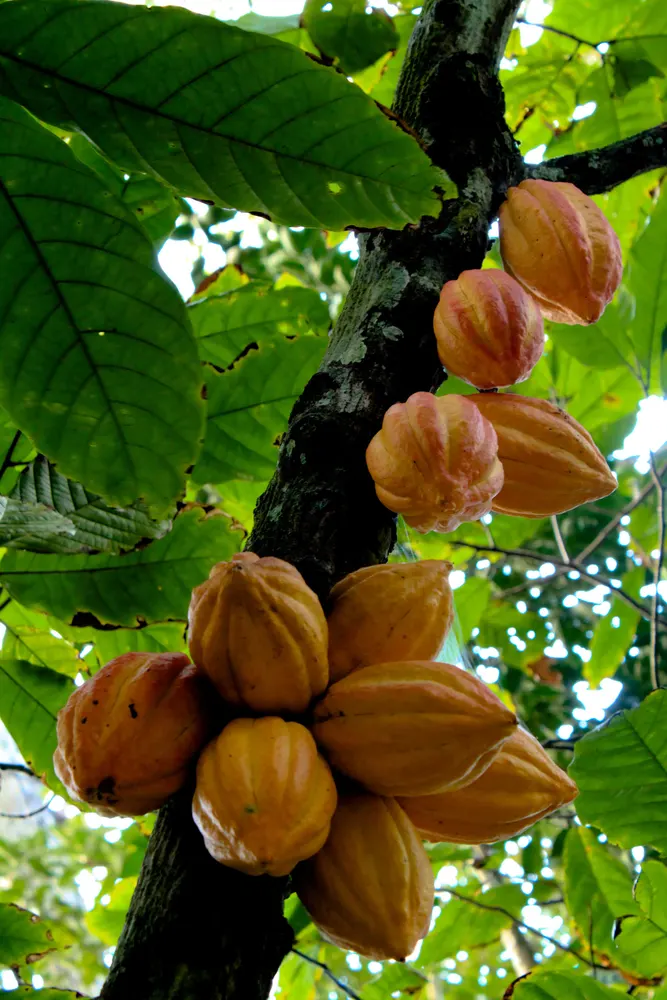
Photo: Luisovalles, CC BY 3.0 (via Wikimedia Commons)
Cacao
Theobroma cacao
Also known as Cocoa, Chocolate Tree, Xocolatl, Cacahuatl, Food of the Gods
Key benefits
✦Traditional uses
✦Long before it became a candy bar, cacao was sacred. The Olmec, Maya, and Aztec peoples prized the beans so highly that they were used as currency and offered to gods and rulers alike, ground and whipped into a bitter, foamy, chili-spiced drink reserved for priests, warriors, and nobility. The Aztecs called it xocolatl, and it was believed to grant strength, wisdom, and even courage before battle. Carl Linnaeus later gave the tree its scientific name, Theobroma, meaning food of the gods, a nod to just how revered this bean had been for thousands of years across Mesoamerica.
How to grow & use it
✦The full apothecary for Cacao
Traditional remedies and step-by-step preparations, a complete growing guide, and how to harvest, dry, and store it, all unlocked with HerbLens Unlimited.
- ✦Remedies & preparations
- ✦ Growing guide
- ✦Harvest & storage
From under $6 a month. Free plant identifications always included.
- ✦Cinnamon
- ✦Vanilla
- ✦Chili pepper
- ✦Carob
- ✦Roasted chicory root
“For a little ceremony in your cup, warmth for the heart, and a lift for the spirit.”
Cacao beans were once so valuable that the Aztecs used them as literal currency, with historical records suggesting a single turkey could be bought for around 100 beans and a fresh avocado for just one.
Cacao's caffeine and theobromine can cause jitteriness or a racing heart in sensitive people if eaten in excess, and it may interact with MAOIs or some heart medications. It is toxic to dogs, cats, and other pets and should be kept out of their reach.