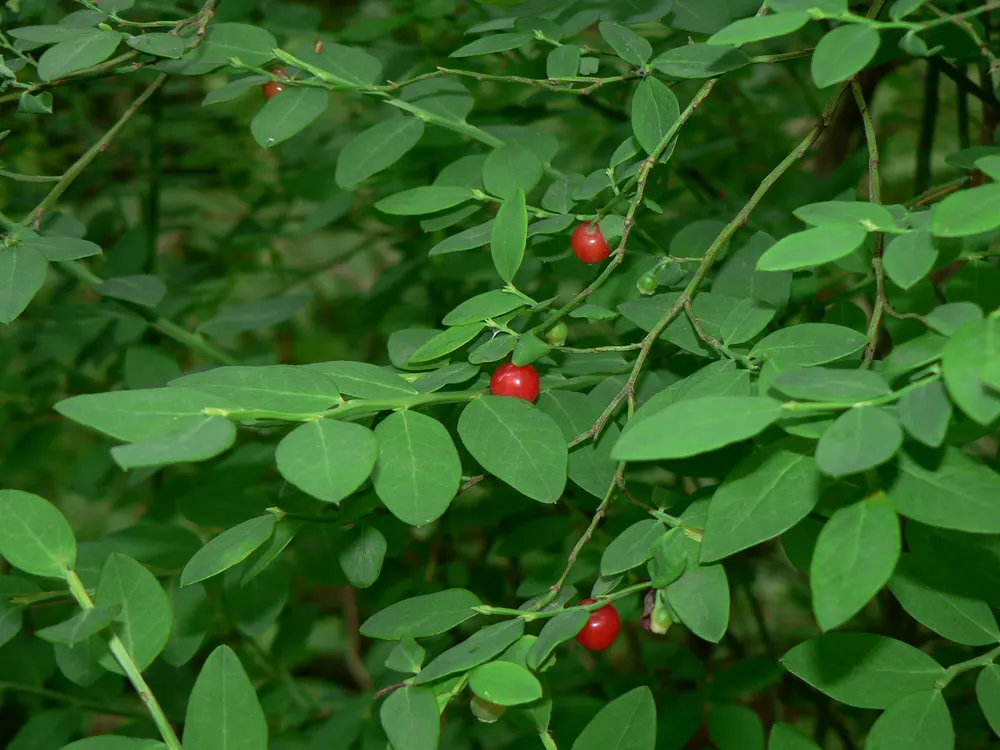
Photo: Walter Siegmund, CC BY 2.5 (via Wikimedia Commons)
Red Huckleberry
Vaccinium parvifolium
Also known as Red Whortleberry, Western Huckleberry, Squi-Squi
Key benefits
✦Traditional uses
✦Long before it graced modern pantries, red huckleberry was a staple food for Coast Salish, Haida, Tlingit, and many other Pacific Northwest peoples, who gathered the tart berries fresh, dried them into cakes for winter, and used them to flavor salmon and other foods. The plant's bright bark and leaves were also brewed into teas that were traditionally used to support digestion and general wellness. Because the berries ripen at the same time salmon return upstream, some coastal nations used their appearance as a seasonal marker, a sign that fishing season had begun. Today the berry is still prized by foragers for its jewel-toned color and sharp, cranberry-like tartness.
How to grow & use it
✦The full apothecary for Red Huckleberry
Traditional remedies and step-by-step preparations, a complete growing guide, and how to harvest, dry, and store it, all unlocked with HerbLens Unlimited.
- ✦Remedies & preparations
- ✦ Growing guide
- ✦Harvest & storage
From under $6 a month. Free plant identifications always included.
- ✦Salal berry
- ✦Oregon grape root
- ✦Rose hip
- ✦Cranberry
- ✦Lingonberry
“For the tart, ruby spark of the deep coastal forest, gathered by hand in the green hush of summer shade.”
Red huckleberry seeds so reliably in rotting stumps and nurse logs that in old-growth Pacific Northwest forests you can often trace the ghostly outline of a fallen tree decades later just by the row of huckleberry bushes still growing along its length.
Red huckleberry is a safe, tart edible berry with no significant toxicity concerns.