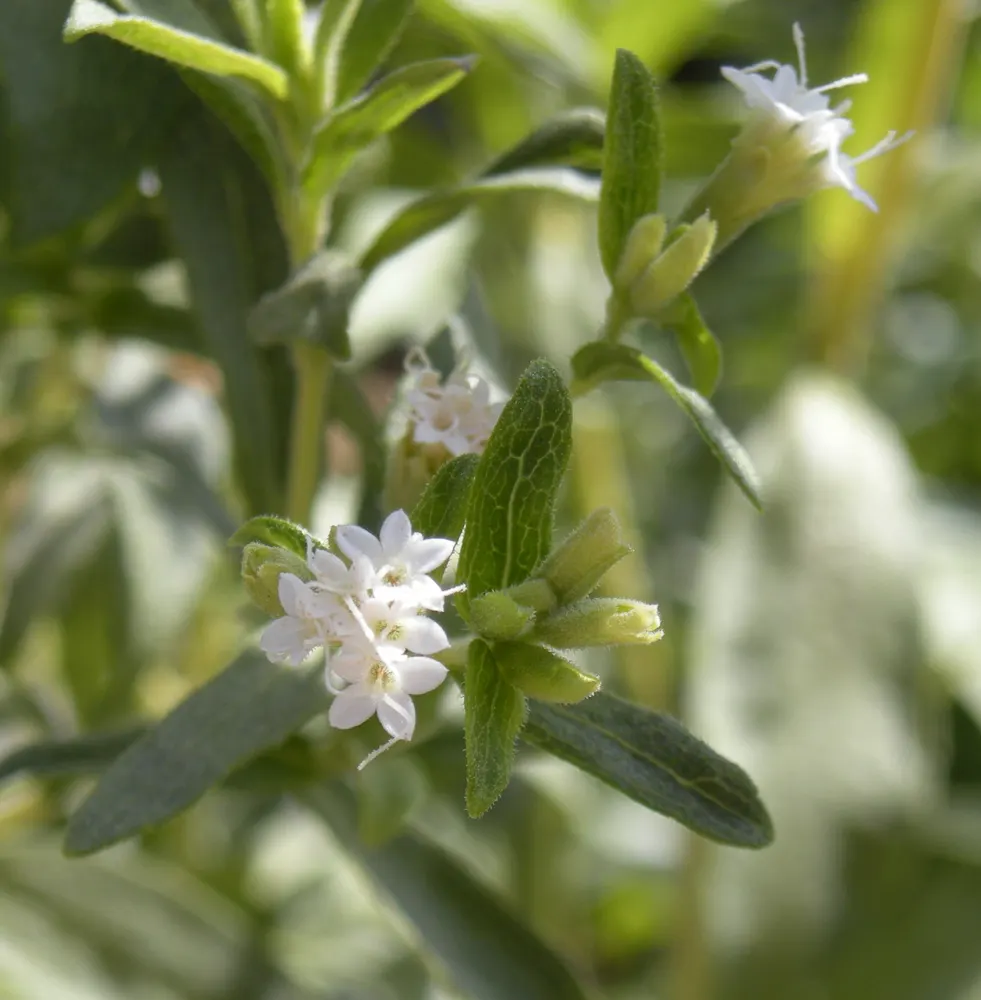
Photo: Ethel Aardvark, CC BY 3.0 (via Wikimedia Commons)
Stevia
Stevia rebaudiana
Also known as Sweetleaf, Sweet Herb, Candyleaf, Ka'a He'ê (Guarani for "sweet herb")
Key benefits
✦Traditional uses
✦For centuries before it appeared on any grocery shelf, the Guarani and other Indigenous peoples of the Paraná River basin cultivated stevia along the edges of their gardens, prizing its leaves for sweetening bitter medicinal teas and daily yerba mate. It was traditionally chewed fresh or steeped as a tea, valued not only for its remarkable sweetness but also as a folk remedy traditionally used to help support healthy blood sugar. Paraguayan botanist Moisés Santiago Bertoni first documented the plant for Western science in the 1890s, learning of it from Guarani guides who had long kept its sweetness as something close to a household secret. It has since traveled from South American kitchen gardens to sweetener aisles worldwide, though its story began humbly, as a small leaf tucked into a cup of tea.
How to grow & use it
✦The full apothecary for Stevia
Traditional remedies and step-by-step preparations, a complete growing guide, and how to harvest, dry, and store it, all unlocked with HerbLens Unlimited.
- ✦Remedies & preparations
- ✦ Growing guide
- ✦Harvest & storage
From under $6 a month. Free plant identifications always included.
- ✦Lemon balm
- ✦Mint
- ✦Chamomile
- ✦Licorice root (for a similarly gentle sweetness in tea blends)
- ✦Monk fruit (for a comparable zero-calorie sweetener)
“You want a whisper of sweetness without a single grain of sugar.”
The Guarani people, who first cultivated stevia, called it ka'a he'e, meaning sweet herb, and used it for centuries to sweeten their bitter yerba mate long before it ever reached a European chemist's notebook.
Stevia leaf is well tolerated in normal culinary amounts. Those with ragweed or related plant allergies should introduce it cautiously, and larger medicinal doses may add to the effect of diabetes or blood pressure medication.