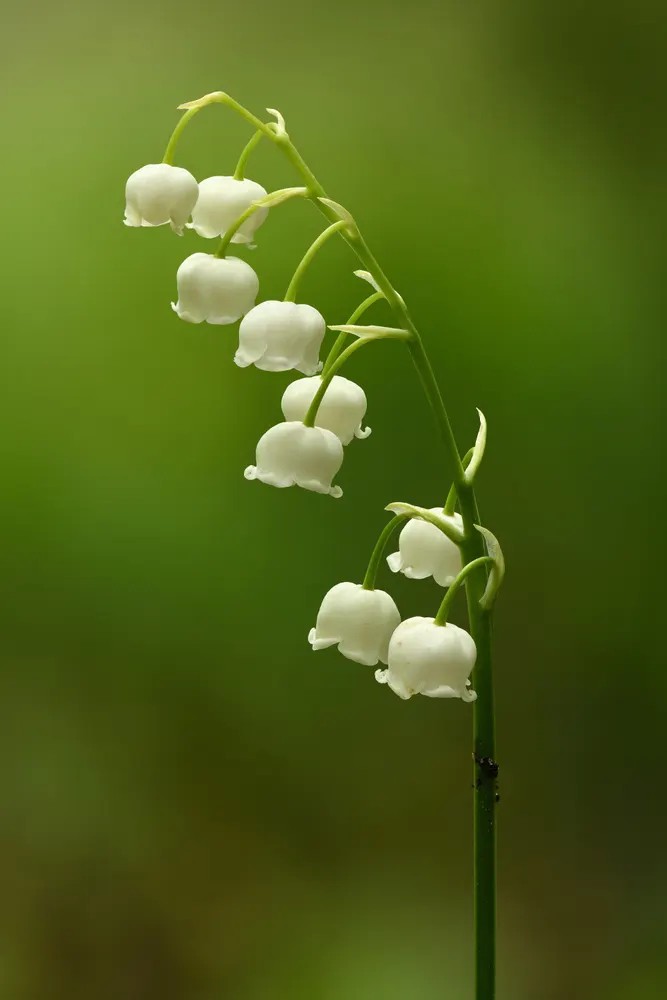
Photo: Ivar Leidus, CC BY-SA 4.0 (via Wikimedia Commons)
Lily of the Valley
Convallaria majalis
Also known as Our Lady's Tears, May Bells, Mary's Tears, Muguet
Key benefits
✦Traditional uses
✦Lily of the valley has been treasured in gardens for centuries for its sweet, unmistakable perfume and its carpet of tiny white bells that appear just as spring settles in. In parts of Europe, especially France, sprigs of it are exchanged on May Day as tokens of good luck and happiness, a custom called muguet du 1er mai that dates back to the Renaissance. Long before that folk sweetness, physicians in the nineteenth and early twentieth centuries isolated cardiac glycosides from the plant and used them, in carefully measured pharmaceutical doses, as a heart tonic similar to foxglove's digitalis. That medical use belonged strictly to trained hands working with purified, standardized extracts, never to home preparation, and it has largely been replaced by safer modern cardiac medicines.
How to grow & use it
✦The full apothecary for Lily of the Valley
Traditional remedies and step-by-step preparations, a complete growing guide, and how to harvest, dry, and store it, all unlocked with HerbLens Unlimited.
- ✦Remedies & preparations
- ✦ Growing guide
- ✦Harvest & storage
From under $6 a month. Free plant identifications always included.
- ✦Hosta
- ✦Ferns
- ✦Bleeding heart, as shade garden companions rather than herbal partners
- ✦Sweet woodruff, for a fragrant low-growing shade groundcover without the toxicity risk
- ✦Pieris (sometimes nicknamed lily-of-the-valley bush), for a similar bell-flower look in a shrub form
“For the hush of a shaded spring bed, never for the teacup.”
Every part of lily of the valley is toxic, including the water left behind after cut flowers have stood in a vase, and even a small handful of the bright red autumn berries can be dangerous to a child or a curious dog if swallowed.
Lily of the valley is genuinely poisonous and should never be eaten, brewed, or otherwise ingested in any home preparation. The entire plant, including its leaves, flowers, red berries, roots, and even the water a cut stem has been standing in, contains cardiac glycosides such as convallatoxin, compounds that act on the heart in a manner similar to digitalis from foxglove. Ingestion can cause nausea, vomiting, abdominal pain, dangerously irregular heart rhythms, confusion, and in serious cases can be life-threatening, and children and pets are especially vulnerable because the berries look enticing and small amounts can cause serious harm. Historical medicinal use of its isolated compounds belonged strictly to physicians working with standardized pharmaceutical extracts under close monitoring, not to any home or folk remedy, and that use has largely been superseded by safer modern heart medications. Skin contact with the plant can also cause irritation in sensitive individuals. Grow it only as an ornamental, keep it away from children's play areas and pets, wash hands after handling it, and if any part is ever swallowed, treat it as a medical emergency and contact Poison Control or a healthcare professional immediately rather than attempting any home treatment.