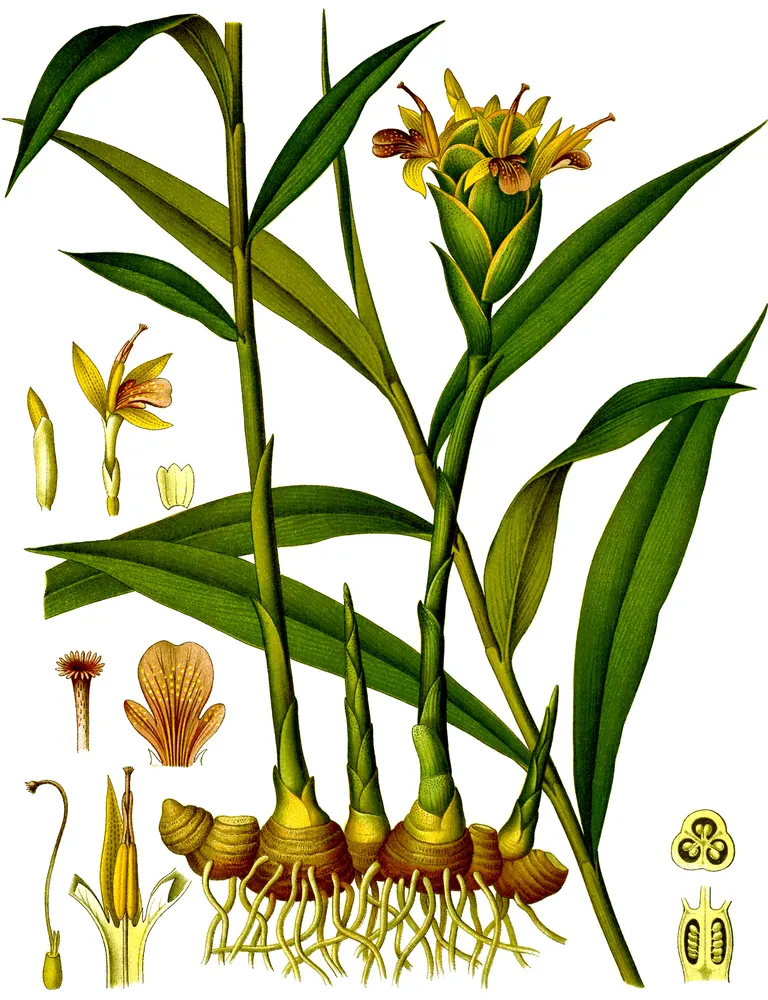
Photo: Franz Eugen Köhler, Köhler's Medizinal-Pflanzen, Public domain (via Wikimedia Commons)
Ginger
Zingiber officinale
Also known as Ginger Root, Adrak
Key benefits
✦Traditional uses
✦Ginger is one of the oldest and most trusted friends of the stomach. Its warming, pungent root has been used for well over two thousand years across Asia and later the whole world to settle nausea, kindle sluggish digestion, and bring comfort during travel, morning queasiness, and illness. That warmth is more than a feeling: gingerols and shogaols are the compounds behind its gentle, steadying effect.
How to grow & use it
✦The full apothecary for Ginger
Traditional remedies and step-by-step preparations, a complete growing guide, and how to harvest, dry, and store it, all unlocked with HerbLens Unlimited.
- ✦Remedies & preparations
- ✦ Growing guide
- ✦Harvest & storage
From under $6 a month. Free plant identifications always included.
- ✦Lemon
- ✦Honey
- ✦Turmeric
- ✦Peppermint
- ✦Fennel
“When your stomach is unsettled or a journey lies ahead.”
Ginger was so prized along medieval trade routes that a pound of it once cost about the same as a whole sheep.
Ginger is well tolerated as a food and spice. Medicinal-strength amounts may thin the blood, so use caution alongside blood-thinning medication or with gallstones.