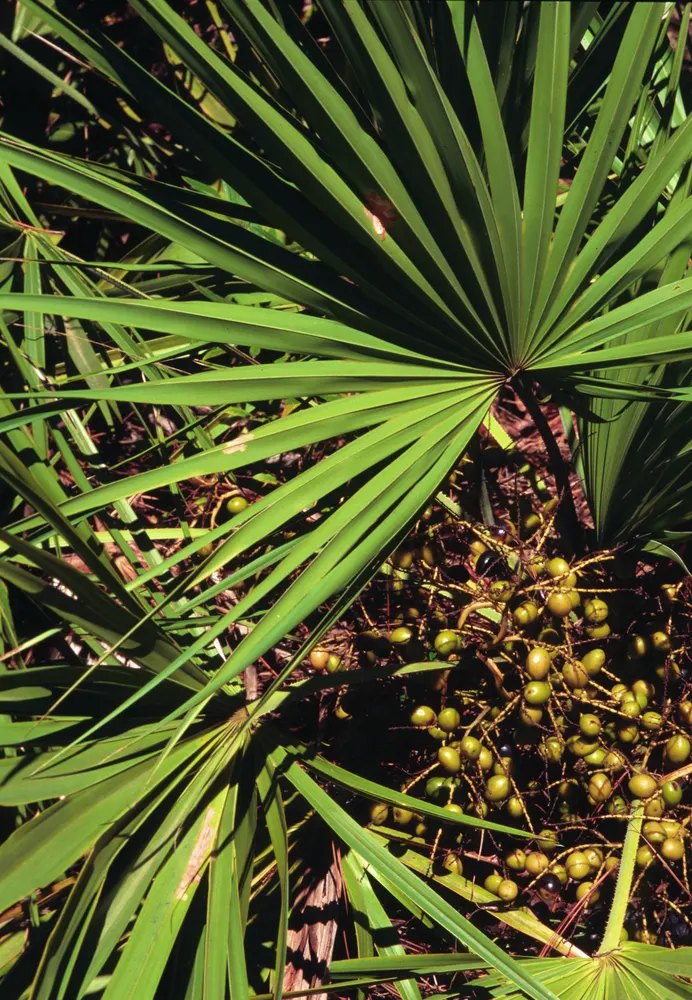
Photo: Ted Bodner, Southern Weed Science Society, United States, CC BY 3.0 us (via Wikimedia Commons)
Saw Palmetto
Serenoa repens
Also known as Sabal, Cabbage Palm, Dwarf Palmetto Berry, Serenoa
Key benefits
✦Traditional uses
✦Long before saw palmetto berries lined pharmacy shelves, the Seminole and other peoples of Florida gathered them as both food and medicine, valuing the oily, dark fruit as a tonic for the whole body. Early American settlers took note of animals thriving on the fallen berries each autumn and began drying and steeping them in the same folk tradition, passing the plant into general use as a comfort for aging men's urinary complaints. By the late 1800s it had become one of the most widely stocked botanicals in American pharmacies, prized as a gentle, nourishing tonic rather than a harsh drug. That reputation carried it forward into modern herbalism, where it remains one of the most studied palms in the world.
How to grow & use it
✦The full apothecary for Saw Palmetto
Traditional remedies and step-by-step preparations, a complete growing guide, and how to harvest, dry, and store it, all unlocked with HerbLens Unlimited.
- ✦Remedies & preparations
- ✦ Growing guide
- ✦Harvest & storage
From under $6 a month. Free plant identifications always included.
- ✦Nettle Root
- ✦Pumpkin Seed
- ✦Damiana
- ✦Pygeum
- ✦Nettle Root
“When you want to lean on a plant as old and patient as the Florida scrub it calls home.”
Saw palmetto spreads underground through slow-creeping rhizomes rather than a single trunk, and some wild colonies in Florida scrub are estimated to be many centuries old, quietly outlasting the pines that grow up around them.
Saw palmetto has mild hormone modulating and blood thinning effects, so avoid it during pregnancy and breastfeeding and use caution with anticoagulant, antiplatelet, or hormone medications. Stop use in the weeks before any scheduled surgery.