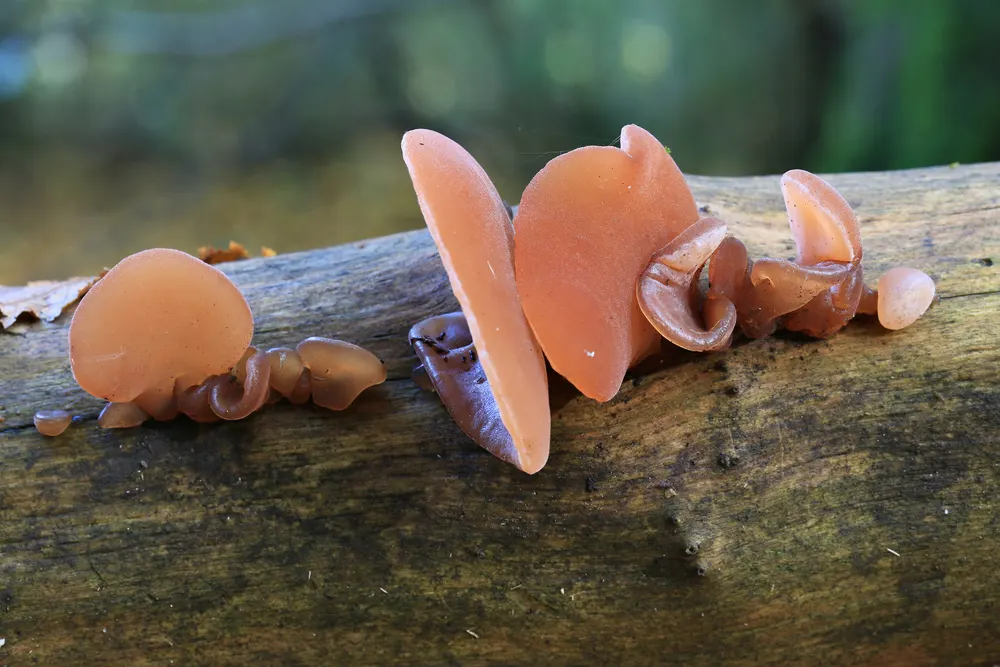
Photo: Stu's Images, CC BY-SA 4.0 (via Wikimedia Commons)
Wood Ear Mushroom
Auricularia auricula
Also known as Jelly Ear, Cloud Ear Fungus, Judas's Ear, Mu Er (Chinese: black fungus), Tree Ear
Key benefits
✦Traditional uses
✦Known in Traditional Chinese Medicine as mu er, or black fungus, wood ear has been simmered into tonic soups for generations, valued for supporting healthy circulation and digestion. In European folklore it carried a different story entirely, growing on old elder trees and earning the name Judas's ear from the legend that Judas Iscariot hanged himself from just such a tree. Cooks across Asia have long prized it not for flavor, which is mild, but for its wonderfully slippery, crunchy texture in soups, stir-fries, and braises. Herbalists in Chinese tradition considered it a gentle, nourishing food-medicine, the kind stirred into a pot rather than dosed from a dropper.
How to grow & use it
✦The full apothecary for Wood Ear Mushroom
Traditional remedies and step-by-step preparations, a complete growing guide, and how to harvest, dry, and store it, all unlocked with HerbLens Unlimited.
- ✦Remedies & preparations
- ✦ Growing guide
- ✦Harvest & storage
From under $6 a month. Free plant identifications always included.
- ✦Ginger
- ✦Astragalus
- ✦Goji Berry
- ✦Cloud Ear Fungus (Auricularia polytricha)
- ✦Shiitake Mushroom
“For a silken, earthy note that has warmed bowls of soup and simmering broths for centuries.”
The old English name Judas's ear came from the belief that this mushroom sprouted from elder trees at the very spot where Judas Iscariot hanged himself, a name that softened over centuries into Jew's ear and eventually today's gentler Jelly Ear.
Wood ear mushroom is not toxic and is widely regarded as a safe, edible fungus when properly cooked, but a few real cautions apply. It should always be cooked rather than eaten raw, as consuming large amounts of raw or undercooked wood ear has, in rare documented cases, been linked to skin photosensitivity reactions. Some research suggests it may affect platelet function, so anyone taking blood-thinning medication should use particular caution and seek medical advice first. As with any foraged mushroom, positive identification is essential before eating anything gathered in the wild, since look-alike fungi exist. Pregnant or nursing individuals, and anyone managing a medical condition or taking medication, should talk with a qualified healthcare professional before adding wood ear as a regular food or traditional remedy.