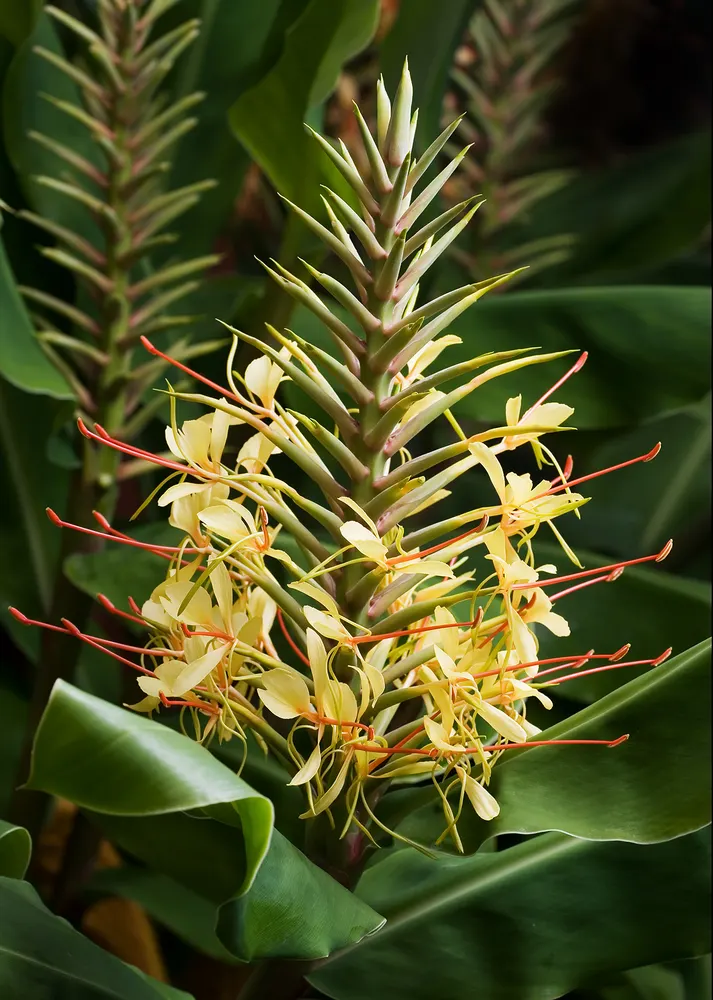
Photo: JJ Harrison (https://www.jjharrison.com.au/), CC BY-SA 3.0 (via Wikimedia Commons)
Kahili Ginger
Hedychium gardnerianum
Also known as Kahili Ginger Lily, Himalayan Ginger Lily, Garland Flower, Ginger Lily
Key benefits
✦Traditional uses
✦In its home range across Nepal, Sikkim, and the eastern Himalayas, Kahili ginger has long been grown near homes and temples for the sheer perfume of its flower spikes, which can scent an entire hillside on a warm evening. Its scent made it a favorite of Victorian plant collectors, who carried it out of the Himalayas in the nineteenth century and into gardens and greenhouses around the world. The flowers are still prized today by perfumers, who extract their heady, spicy-sweet fragrance for use in fine fragrance blends. Unlike some of its cousins in the ginger family, this particular species has not built up a strong, well-documented history as a medicinal or culinary herb, so it is best appreciated here for its beauty and scent rather than as a remedy.
How to grow & use it
✦The full apothecary for Kahili Ginger
Traditional remedies and step-by-step preparations, a complete growing guide, and how to harvest, dry, and store it, all unlocked with HerbLens Unlimited.
- ✦Remedies & preparations
- ✦ Growing guide
- ✦Harvest & storage
From under $6 a month. Free plant identifications always included.
- ✦Plumeria
- ✦Jasmine
- ✦True ginger (Zingiber officinale)
- ✦White ginger lily (Hedychium coronarium)
“For a garden corner that wants to smell like a warm Himalayan evening.”
The same intoxicating fragrance that made Kahili ginger a beloved garden import is also its undoing in places like Hawaii, where it now blankets native rainforest understory so thickly that it is ranked among the islands' most troublesome invasive weeds.
Kahili ginger is not an established food or medicine and should not be eaten. The sap may mildly irritate sensitive skin during handling.