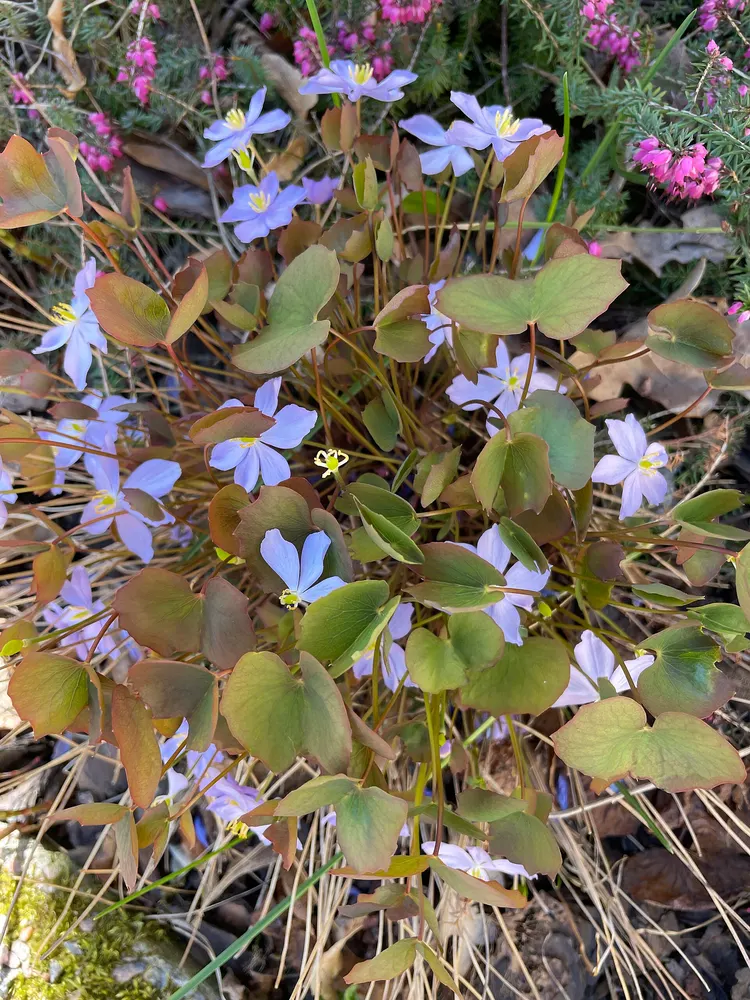
Photo: Dr. Alexey Yakovlev, CC BY-SA 2.0 (via Wikimedia Commons)
Asian Twinleaf
Plagiorhegma dubium
Also known as Korean Twinleaf, Jeffersonia dubia, Asian Jeffersonia
Key benefits
✦Traditional uses
✦Plagiorhegma dubium is best known and loved as an ornamental, one of the first woodland plants to bloom each year, its lavender cup-shaped flowers opening before the paired leaves have even fully unfurled. It shares its old genus name, Jeffersonia, with its North American cousin Jeffersonia diphylla, which was documented in early American folk medicine, but the Asian species itself has little recorded history of medicinal use outside its native range. Gardeners have prized it for centuries in East Asian woodland plantings for its quiet, fleeting beauty rather than for any household remedy.
How to grow & use it
✦The full apothecary for Asian Twinleaf
Traditional remedies and step-by-step preparations, a complete growing guide, and how to harvest, dry, and store it, all unlocked with HerbLens Unlimited.
- ✦Remedies & preparations
- ✦ Growing guide
- ✦Harvest & storage
From under $6 a month. Free plant identifications always included.
- ✦Hepatica
- ✦Trillium
- ✦Epimedium
- ✦Jeffersonia diphylla (American twinleaf)
“For the shaded corner that gets the very first, quiet word of spring.”
The old genus name Jeffersonia, still used as this plant's common synonym, was given in 1792 by botanist Benjamin Smith Barton in honor of Thomas Jefferson, an enthusiastic amateur botanist himself. The twinleaf name comes from the deeply cleft leaf, split into two nearly mirror-image lobes that look like a pair of butterfly wings.
No established history of safe internal use, and it belongs to the barberry family, which includes plants with concerning alkaloid content, so it shouldn't be eaten and should be kept away from children and pets.