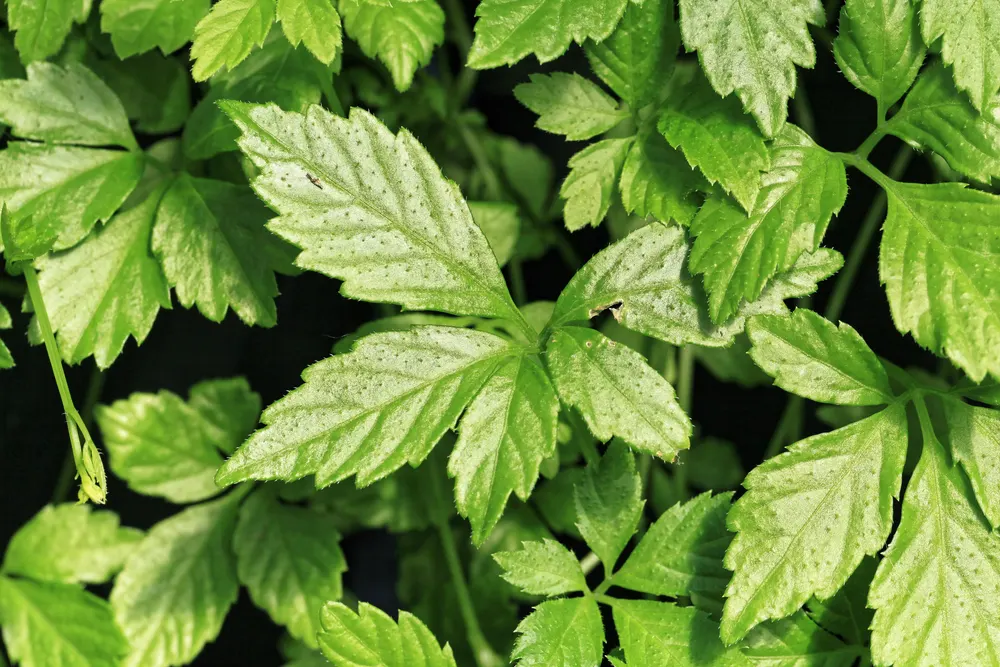
Photo: Frank Vincentz, CC BY-SA 3.0 (via Wikimedia Commons)
Jiaogulan
Gynostemma pentaphyllum
Also known as Southern Ginseng, Sweet Tea Vine, Immortality Herb, Xiancao, Poor Man's Ginseng
Key benefits
✦Traditional uses
✦In the misty mountains of Guizhou province, villagers have long brewed the tender leaves of this delicate vine into a daily tea they simply called xiancao, the immortality herb, after generations were observed living long, hale lives on little else but rice, vegetables, and this humble brew. Chinese herbalists eventually took note and began studying it as a folk substitute for the far pricier ginseng root, prizing it for the same quiet, sustaining vitality without the expense. Because its leaves contain saponin compounds structurally similar to those found in Panax ginseng, jiaogulan came to be called southern ginseng, a plant of the poor that offered the resilience of a plant of the wealthy. Today it remains a cherished everyday tonic across much of Southeast Asia, sipped the way others might sip green tea.
How to grow & use it
✦The full apothecary for Jiaogulan
Traditional remedies and step-by-step preparations, a complete growing guide, and how to harvest, dry, and store it, all unlocked with HerbLens Unlimited.
- ✦Remedies & preparations
- ✦ Growing guide
- ✦Harvest & storage
From under $6 a month. Free plant identifications always included.
- ✦Goji berry
- ✦Licorice root
- ✦Green tea
- ✦Astragalus
- ✦Panax ginseng
“For the quiet, unhurried kind of steady, the sort of energy that asks nothing back.”
Jiaogulan's leaves grow in sets of five leaflets, which is exactly what its species name pentaphyllum means in Greek, five-leaved, though older or more vigorous vines will sometimes surprise you with seven.
Jiaogulan is a well-tolerated traditional tea, though large amounts can cause nausea or a laxative effect. It may lower blood pressure and thin the blood, so use caution with blood pressure medication or blood thinners, and avoid it before surgery or during pregnancy and breastfeeding.