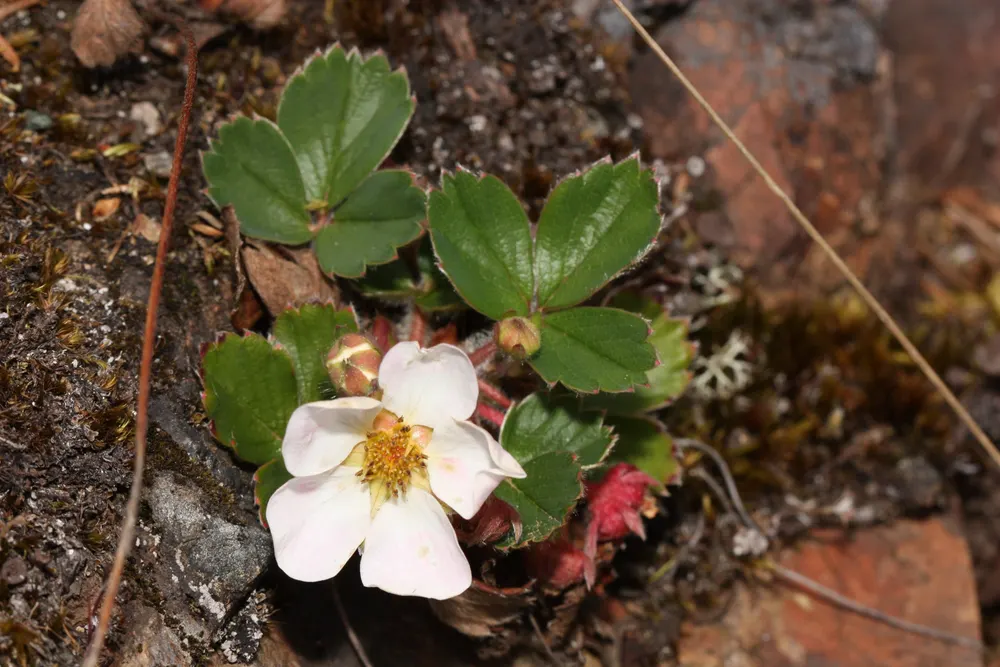
Photo: Walter Siegmund (talk), CC BY-SA 3.0 (via Wikimedia Commons)
Wild Strawberry
Fragaria virginiana
Also known as Virginia Strawberry, Wood Strawberry, Mountain Strawberry
Key benefits
✦Traditional uses
✦Long before the plump garden strawberry was bred from it, Fragaria virginiana was already treasured by Indigenous peoples across eastern North America, who ate the small sweet berries fresh and dried the leaves for tea. Many nations, including the Cherokee and Iroquois, steeped the leaves as a gentle remedy for upset stomachs and diarrhea, and the plant found a place in seasonal foraging traditions as one of the first fruits of early summer. Early European settlers quickly adopted these same leaf-tea habits, folding wild strawberry into household remedy books as a mild, everyday tonic herb. Its tannin-rich leaves earned it a lasting reputation as one of the gentlest astringent herbs in the traditional pantry.
How to grow & use it
✦The full apothecary for Wild Strawberry
Traditional remedies and step-by-step preparations, a complete growing guide, and how to harvest, dry, and store it, all unlocked with HerbLens Unlimited.
- ✦Remedies & preparations
- ✦ Growing guide
- ✦Harvest & storage
From under $6 a month. Free plant identifications always included.
- ✦Raspberry leaf
- ✦Peppermint
- ✦Nettle
- ✦Raspberry leaf
“For the gentlest of tonics, a small green leaf and a memory of summer fields.”
Botanically speaking, the strawberry isn't really a berry at all. The fleshy red part is a swollen receptacle, and the true fruits are the tiny yellow specks dotting its surface, each one a separate seed-bearing achene.
Wild strawberry leaf and fruit are safe to eat, though the leaf has a folk reputation as a mild uterine tonic and is traditionally avoided in early pregnancy.