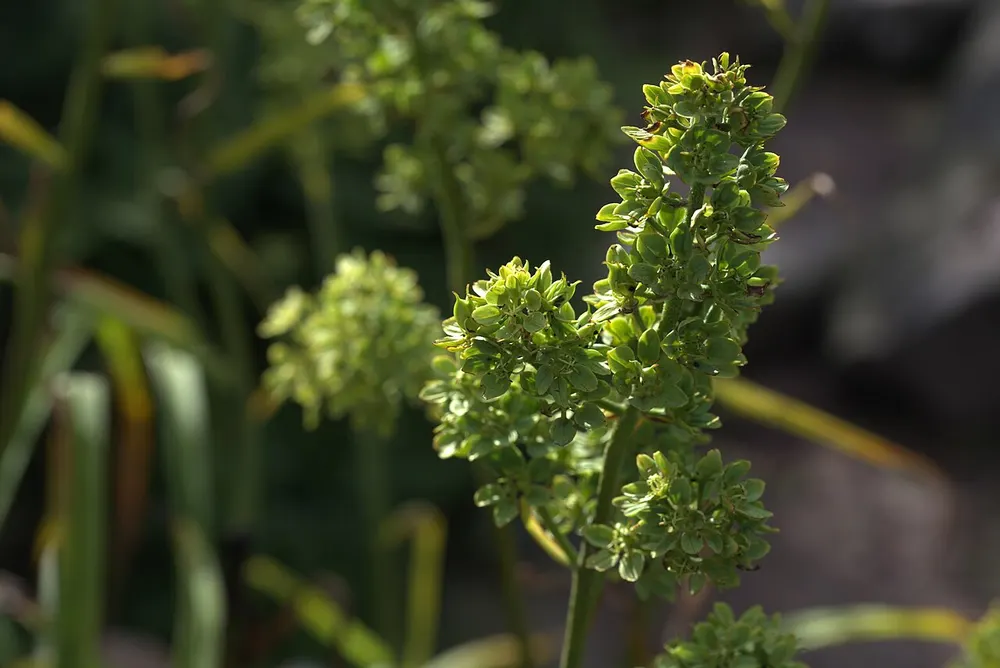
Photo: Averater, CC BY 4.0 (via Wikimedia Commons)
Virginia Bunchflower
Melanthium virginicum
Also known as Virginia Bunchflower, Virginia Deathcamas, Bunchflower
Key benefits
✦Traditional uses
✦Virginia bunchflower has no real history as a medicine or food plant. What history it does have is mostly cautionary, it belongs to the same toxic branch of the bunchflower family as death camas and false hellebore, and foragers and herbalists have long been taught to recognize and avoid it rather than gather it. Its greatest traditional value has simply been as a warning marker, a plant whose star-shaped blooms and grass-like leaves can be confused with edible wild onions or camas bulbs, so learning to tell it apart was a genuinely useful piece of old woodcraft. Today it is best appreciated as a native wildflower in wet prairies and restoration plantings rather than as an ingredient of any kind.
How to grow & use it
✦The full apothecary for Virginia Bunchflower
Traditional remedies and step-by-step preparations, a complete growing guide, and how to harvest, dry, and store it, all unlocked with HerbLens Unlimited.
- ✦Remedies & preparations
- ✦ Growing guide
- ✦Harvest & storage
From under $6 a month. Free plant identifications always included.
- ✦Joe Pye weed
- ✦Swamp milkweed
- ✦Culver's root
“This is not an entry for the medicine chest. It is here so you can recognize a striking wildflower and know to admire it from a respectful distance.”
Virginia bunchflower gets its common name from the loose, branching clusters of small greenish-white to purplish star-shaped flowers that seem to burst outward from the top of the stalk like a bundle of tiny fireworks, a trait that also makes it easy to spot along the edges of wet meadows in high summer.
Virginia bunchflower is considered toxic and should never be eaten, brewed, or otherwise taken internally. Like its relatives death camas and false hellebore, it contains poisonous alkaloids that can cause nausea, vomiting, drooling, weakness, a dangerously slowed heartbeat, and difficulty breathing if ingested, and livestock poisonings from this plant and its close relatives are well documented. Its bulb and young leaves can be mistaken for edible wild onions, garlic, or camas, which makes misidentification a real and serious danger for foragers. Keep it away from children, pets, and grazing animals, do not use any part of it as food or medicine, and if ingestion is ever suspected, contact poison control or a medical professional immediately. This entry is offered for botanical identification and garden interest only, not as a guide to use.