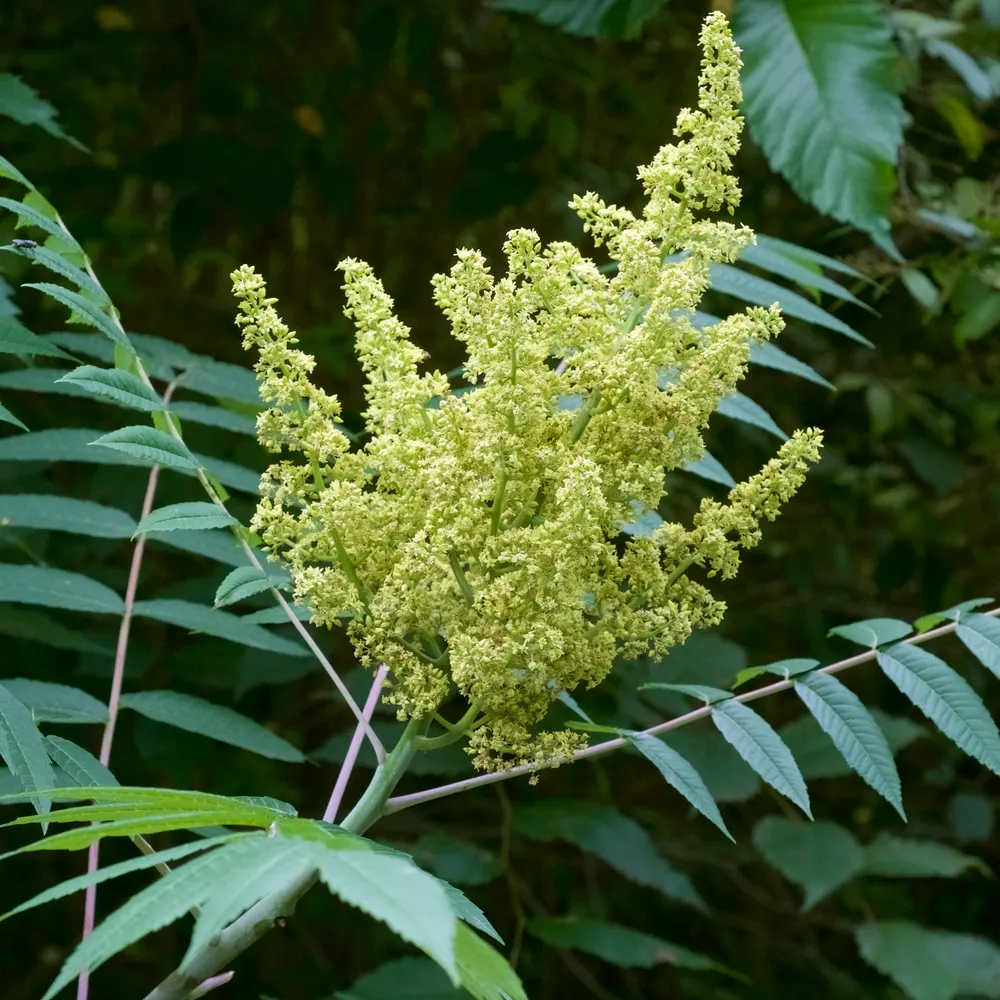
Photo: Eric Hunt, CC BY-SA 4.0 (via Wikimedia Commons)
Smooth Sumac
Rhus glabra
Also known as Scarlet Sumac, Vinegar Tree, Upland Sumac, Indian Lemonade Bush
Key benefits
✦Traditional uses
✦Long before lemons made their way into North American kitchens, many Native American nations, including the Ojibwe, Iroquois, and various Plains peoples, steeped the ripe, fuzzy red berry clusters of smooth sumac in cool water to make a tart, refreshing drink often called Indian lemonade. This infusion, rich in vitamin C, was traditionally used to ease sore throats, calm fevers, and refresh travelers during the heat of late summer. The bark, leaves, and berries were also brewed into astringent washes for wounds, skin irritation, and mouth sores, and the tannin-rich leaves and bark found use in tanning hides and dyeing. Because it colored so much of daily life, from thirst-quencher to medicine cabinet to craft, smooth sumac earned a steady place in the folk traditions of the communities who grew up alongside its fencerows and forest edges.
How to grow & use it
✦The full apothecary for Smooth Sumac
Traditional remedies and step-by-step preparations, a complete growing guide, and how to harvest, dry, and store it, all unlocked with HerbLens Unlimited.
- ✦Remedies & preparations
- ✦ Growing guide
- ✦Harvest & storage
From under $6 a month. Free plant identifications always included.
- ✦Hibiscus
- ✦Wild mint
- ✦Rose hips
- ✦Hibiscus flowers
- ✦Fresh lemon zest
“When you want the tart, ruby-red taste of the autumn hedgerow, steeped cool and sipped slow.”
Smooth sumac is the only shrub or tree native to all forty-eight contiguous United States, and its leaves are often the very first to blaze scarlet each autumn, long before any other tree along the fencerow catches fire.
Smooth sumac is not the same plant as poison sumac, which grows in wet ground, has whitish berries, and causes a severe rash, so confirm identification before harvesting. Don't gather berry clusters after rain, since the tart flavor washes away and can leave mold behind, and those allergic to cashews or mangoes may also react to sumac.