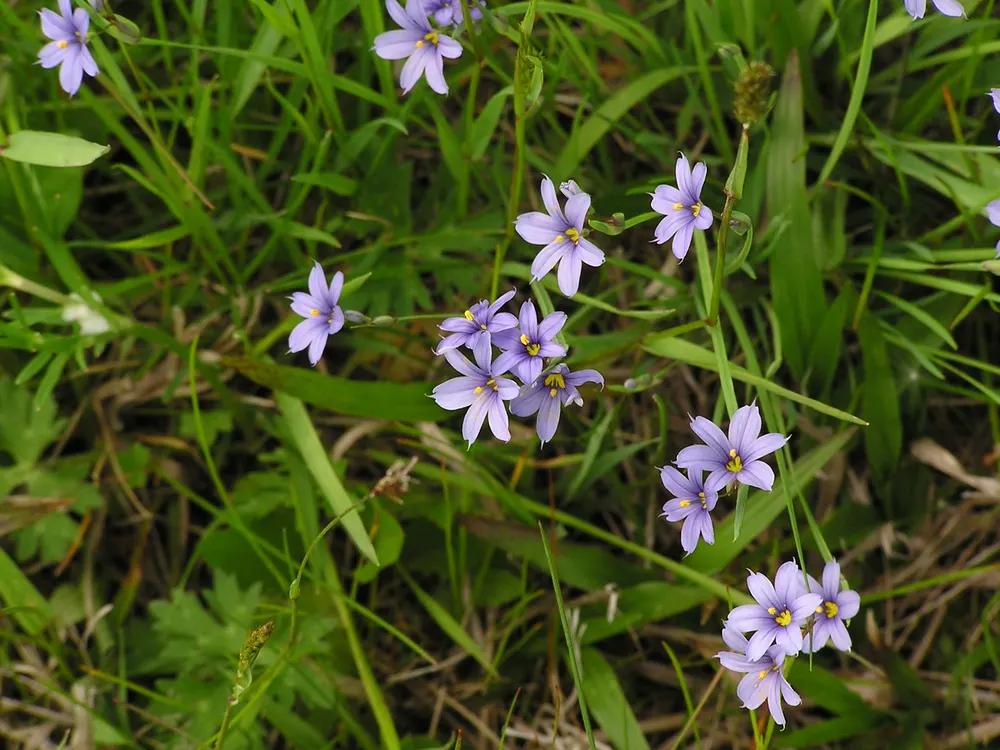
Photo: User:SB_Johnny, CC BY-SA 3.0 (via Wikimedia Commons)
Mountain Blue-eyed Grass
Sisyrinchium montanum
Also known as Strict Blue-eyed Grass, Blue-eyed Grass, Common Blue-eyed Grass
Key benefits
✦Traditional uses
✦Mountain blue-eyed grass has lived quietly at the edges of prairies and wet meadows for longer than anyone has kept written record of it, its small violet stars opening each morning and folding shut again by evening. A few Native American communities noted uses for related Sisyrinchium species in easing digestive upset, though the historical record for this particular species is thin and inconsistent, more a footnote than a settled tradition. Mostly, this little iris relative earned its keep simply by being lovely, threading blue through the green of early summer grasslands and telling foragers and herbalists alike that the growing season had truly begun.
How to grow & use it
✦The full apothecary for Mountain Blue-eyed Grass
Traditional remedies and step-by-step preparations, a complete growing guide, and how to harvest, dry, and store it, all unlocked with HerbLens Unlimited.
- ✦Remedies & preparations
- ✦ Growing guide
- ✦Harvest & storage
From under $6 a month. Free plant identifications always included.
- ✦Wild bergamot
- ✦Prairie coneflower
- ✦Little bluestem
- ✦Other native Sisyrinchium species such as narrowleaf blue-eyed grass
“For the meadow that wants a scatter of small blue stars among the green.”
Despite its common name and grass-like foliage, blue-eyed grass is not a grass at all, it is a true member of the iris family. Each starry flower opens only in sunshine and closes up on cloudy afternoons and every night, so a meadow full of blooms can seem to vanish and reappear with the weather.
Mountain blue-eyed grass has no established history as a food or medicine, so it is best enjoyed as a wildflower rather than eaten.