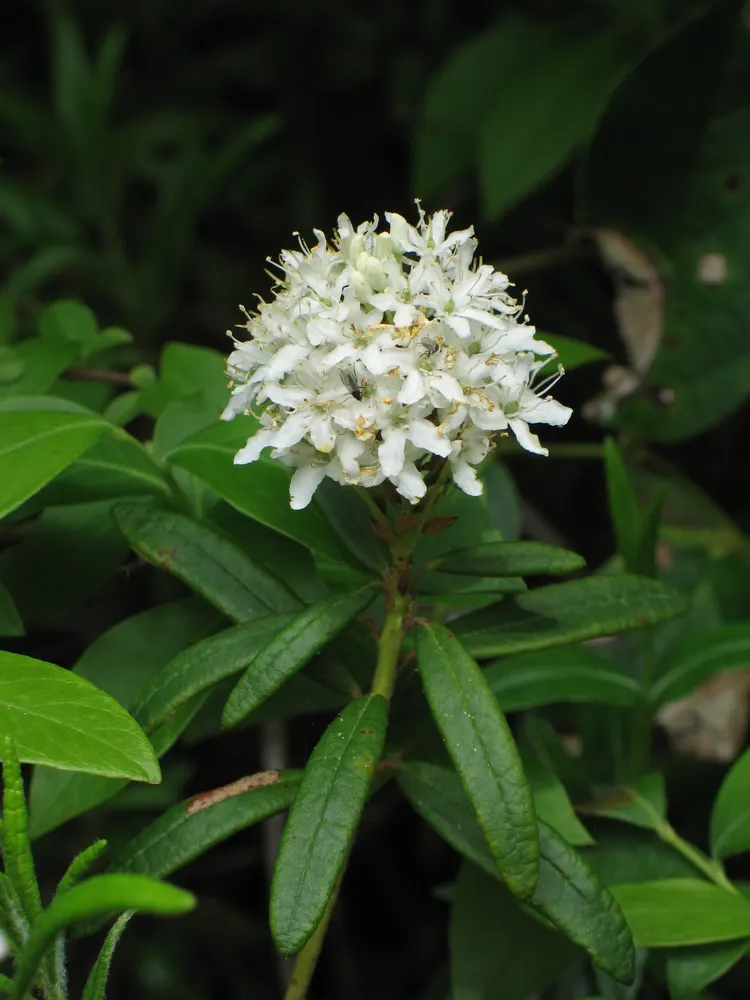
Photo: Robert Flogaus-Faust, CC BY 4.0 (via Wikimedia Commons)
Labrador Tea
Rhododendron groenlandicum
Also known as Hudson's Bay Tea, Marsh Tea, Muskeg Tea, Ledum groenlandicum (older name), Ledum groenlandicum
Key benefits
✦Traditional uses
✦For countless generations, Inuit, Cree, Ojibwe, and other Indigenous peoples across the circumpolar north gathered the narrow, curled leaves of this low bog shrub to brew a warming tea against the deep cold. It was traditionally sipped for colds, coughs, sore throats, and unsettled stomachs, and the leaves were sometimes made into a poultice for skin troubles. When Hudson's Bay Company traders and northern settlers ran short of imported black tea, they turned to this plant instead, which is how it earned the name Hudson's Bay tea and became a fixture of trapper cabins and northern kitchens alike.
How to grow & use it
✦The full apothecary for Labrador Tea
Traditional remedies and step-by-step preparations, a complete growing guide, and how to harvest, dry, and store it, all unlocked with HerbLens Unlimited.
- ✦Remedies & preparations
- ✦ Growing guide
- ✦Harvest & storage
From under $6 a month. Free plant identifications always included.
- ✦Wild rose hips
- ✦Peppermint
- ✦Spruce tip
- ✦Black tea (its historic northern substitute)
- ✦Chamomile, for a milder warming tea
“For the trapper's cabin, the long walk back from the bog, and a cold that won't let go.”
When imported black tea grew scarce along the northern fur trade routes, Hudson's Bay Company traders and settlers steeped this plant's leaves instead, which is exactly how it came to be called Hudson's Bay tea.
Brewed strong or drunk in quantity, Labrador tea is toxic and has caused nausea, cramping, and drowsiness, so it should only be brewed weak and enjoyed occasionally. It grows alongside poisonous bog-rosemary, a dangerous look-alike, so correct identification is essential before foraging.