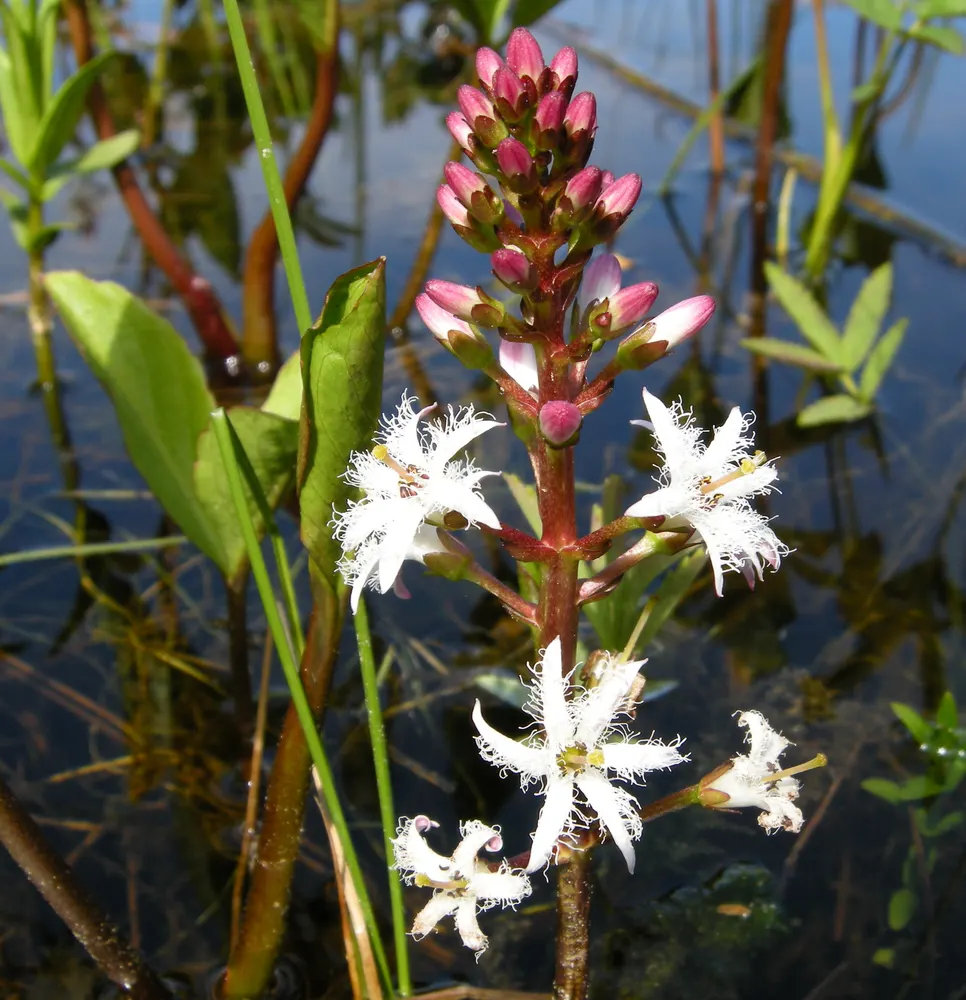
Photo: Arnstein Rønning, CC BY 3.0 (via Wikimedia Commons)
Bogbean
Menyanthes trifoliata
Also known as Buckbean, Marsh Trefoil, Water Shamrock, Bog Myrtle Trefoil
Key benefits
✦Traditional uses
✦Bogbean has long been counted among the great bitter herbs of northern European folk medicine, its intensely bitter trefoil leaves chewed or brewed to wake a sluggish appetite and stir the digestion before a meal. Herbalists in Britain and Scandinavia traditionally turned to it for what old texts called sluggish stomachs and for the aches of rheumatism, treating it as a tonic to be taken in small, careful amounts rather than a food. Before hops became the standard, brewers in parts of Scandinavia even used dried bogbean leaf to lend beer its bitterness. It grows nowhere near dry ground, always with its roots in mud or shallow water, which made it a plant gathered rather than farmed for most of its long history in folk practice.
How to grow & use it
✦The full apothecary for Bogbean
Traditional remedies and step-by-step preparations, a complete growing guide, and how to harvest, dry, and store it, all unlocked with HerbLens Unlimited.
- ✦Remedies & preparations
- ✦ Growing guide
- ✦Harvest & storage
From under $6 a month. Free plant identifications always included.
- ✦Gentian root
- ✦Dandelion root
- ✦Chamomile
- ✦Gentian root
- ✦Wormwood
“For when the appetite has gone quiet and the digestion needs a bitter nudge awake.”
Before hops became the standard bittering agent, brewers in parts of Scandinavia used dried bogbean leaf to flavor and preserve their beer, and the plant's old English name buckbean comes from its three-part leaves, which early herbalists thought resembled a bean plant's foliage rising from the bog.
Bogbean is intensely bitter, and large amounts can cause nausea, vomiting, or diarrhea, so it's traditionally used in small, sip-sized doses. Avoid it if you have gastritis, ulcers, or active inflammatory bowel disease, and during pregnancy or breastfeeding.