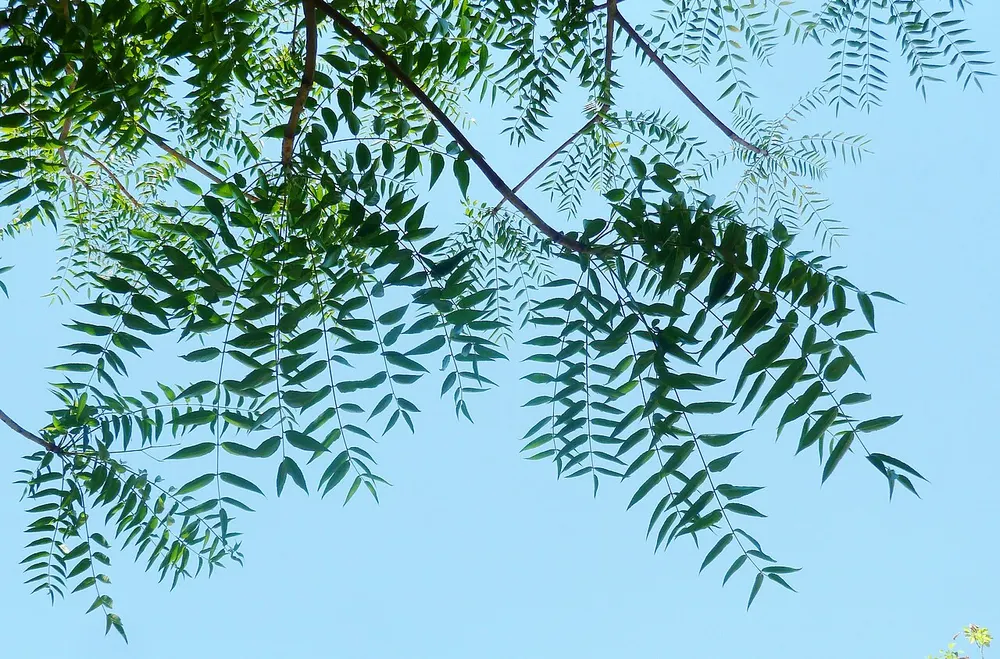
Photo: JMK, CC BY-SA 3.0 (via Wikimedia Commons)
White Syringa
Kirkia acuminata
Also known as Wit-sering, Mususu
Key benefits
✦Traditional uses
✦Long before it found its way into gardens, White Syringa grew wild across the rocky hillsides of Zimbabwe, Botswana, Mozambique, and South Africa's Limpopo province, its pale trunk visible for miles against the bushveld. Communities across this range have traditionally prepared decoctions from the bark and root to settle stomach complaints, a practice carried mostly through direct knowledge passed between healers rather than written recipe. The tree's soft, straw-colored wood was just as prized as its medicine, carved into drums, stools, mortars, and spoons by craftspeople who valued how easily it worked when freshly cut and how well it held up once seasoned. Even today, across much of its native range, the White Syringa is remembered less as a delicate medicinal herb and more as a steady, useful tree woven into everyday life.
How to grow & use it
✦The full apothecary for White Syringa
Traditional remedies and step-by-step preparations, a complete growing guide, and how to harvest, dry, and store it, all unlocked with HerbLens Unlimited.
- ✦Remedies & preparations
- ✦ Growing guide
- ✦Harvest & storage
From under $6 a month. Free plant identifications always included.
“For the dry, stony ground where little else takes root, and the quiet, useful trees that ask for almost nothing in return.”
Despite its common name, White Syringa is not related to the true lilacs of the genus Syringa at all. Early settlers in southern Africa simply borrowed the familiar name for its pale, smooth bark and generous shade, and it stuck ever since.
White syringa's bark and root have not been well studied, and there's no reliable data on safe dosing or drug interactions. Traditional use relies on guidance from experienced healers rather than home recipes, and it's best avoided during pregnancy, breastfeeding, and in young children.