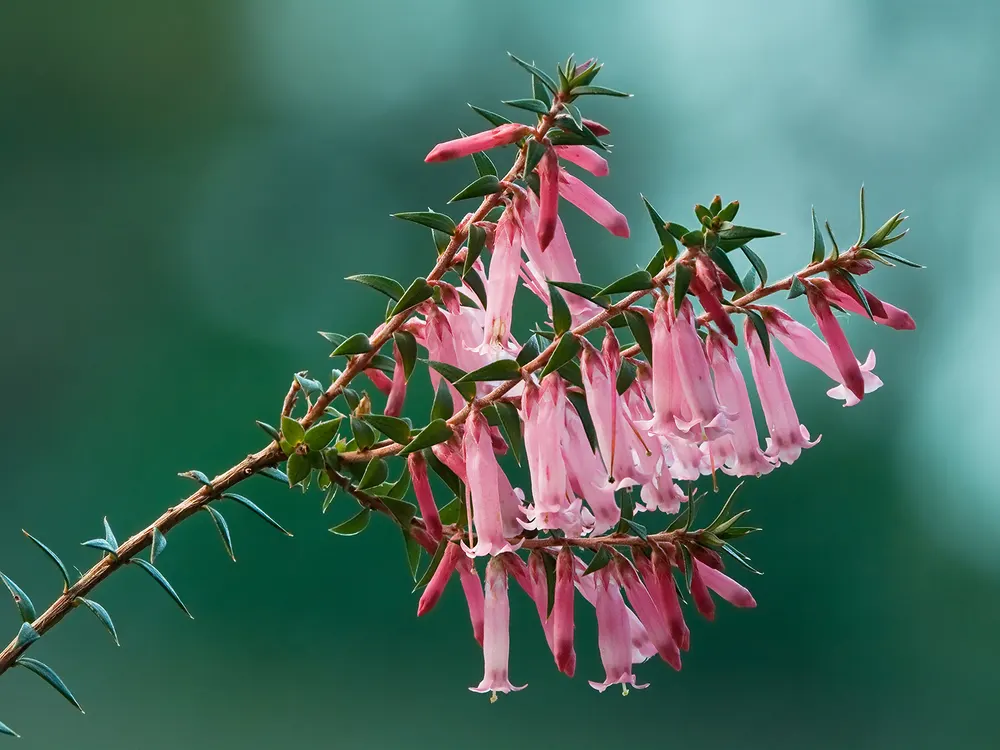
Photo: JJ Harrison (https://www.jjharrison.com.au/), CC BY-SA 3.0 (via Wikimedia Commons)
Common Heath
Epacris impressa
Also known as Native Heath, Pink Heath, Fuchsia Heath (regional)
Key benefits
✦Traditional uses
✦Common Heath has no established history as a medicinal or culinary herb, so this entry is offered as a botanical portrait rather than a remedy guide. Its real legacy is horticultural and cultural. Early European collectors were captivated by its slender, bell-hung stems, and it became one of the first Australian wildflowers cultivated abroad in the early 1800s, prized in English glasshouses for the way its tubular pink flowers lit up in the depths of winter. In 1958 it was proclaimed the floral emblem of Victoria, a nod to how thoroughly this modest heathland shrub had woven itself into the region's identity.
How to grow & use it
✦The full apothecary for Common Heath
Traditional remedies and step-by-step preparations, a complete growing guide, and how to harvest, dry, and store it, all unlocked with HerbLens Unlimited.
- ✦Remedies & preparations
- ✦ Growing guide
- ✦Harvest & storage
From under $6 a month. Free plant identifications always included.
- ✦Kangaroo paw
- ✦Grevillea
- ✦Banksia
- ✦Erica species (European heaths)
- ✦Epacris longiflora, the fuchsia heath, for a similar tubular bloom
“For the shrub that turns a gray winter heathland into a curtain of pink bells.”
The species name impressa comes from the five tiny pits pressed into the base of each flower tube, a small dimpled detail that botanist Jacques Labillardière noticed and named the plant for back in 1805.
Common heath has no established food or medicinal use, so avoid eating or brewing it, and keep it away from pets and children who might chew the foliage.