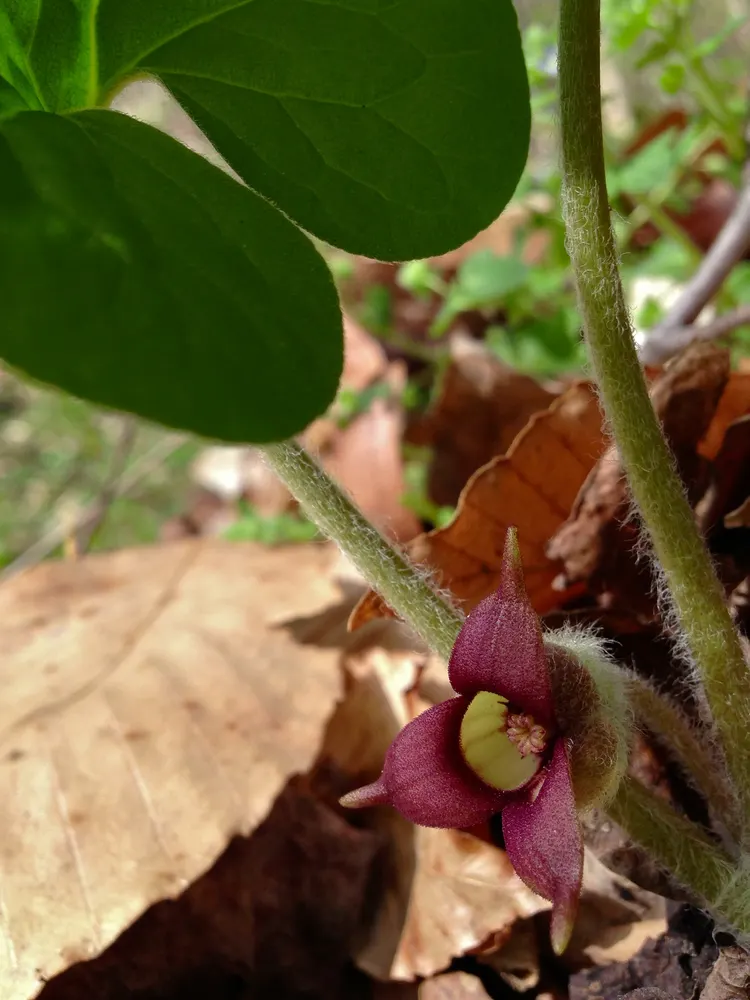
Photo: Fritzflohrreynolds, CC BY-SA 3.0 (via Wikimedia Commons)
Wild Ginger
Asarum canadense
Also known as Canadian Wild Ginger, Canada Snakeroot, Indian Ginger, Heart-leaf
Key benefits
✦Traditional uses
✦Long before it carried the name wild ginger, this low woodland plant was dug, dried, and simmered by more than a dozen Native American nations as a warming flavoring and a folk remedy for upset stomachs, coughs, and colds, prized for a peppery aroma that reminded settlers of true ginger from the tropics even though the two plants are not related at all. Early colonists adopted it eagerly, candying the root in sugar syrup as a homestead treat and steeping it as a fireside tea. That old reputation still lingers in its common name and in field guides, but it belongs to history rather than to the modern kitchen or medicine cabinet, since later research uncovered compounds in the plant that make internal use unwise. Today wild ginger is better known and better loved as one of the most graceful native groundcovers for a shaded garden.
How to grow & use it
✦The full apothecary for Wild Ginger
Traditional remedies and step-by-step preparations, a complete growing guide, and how to harvest, dry, and store it, all unlocked with HerbLens Unlimited.
- ✦Remedies & preparations
- ✦ Growing guide
- ✦Harvest & storage
From under $6 a month. Free plant identifications always included.
- ✦Solomon's seal
- ✦Foamflower
- ✦Christmas fern
- ✦True ginger (Zingiber officinale), the safe modern kitchen substitute for any recipe or remedy calling for a warming ginger flavor, since wild ginger's root chemistry makes it unsuitable for eating or steeping
“For the quiet, shaded corner of a garden that wants a living carpet, not for the teapot.”
Wild ginger's odd little maroon flowers bloom right at ground level, hidden under the leaf canopy, and rely on early crawling insects for pollination rather than bees; its seeds carry a fatty appendage called an elaiosome that ants find irresistible, so the ants haul the seeds back to their nests and unwittingly plant new colonies of ginger along their tunnels.
Contains aristolochic acid, a confirmed kidney toxin and carcinogen even in small amounts, so it should never be eaten or brewed despite its folk history as a ginger substitute. Enjoy it only as a garden plant, never as true ginger.