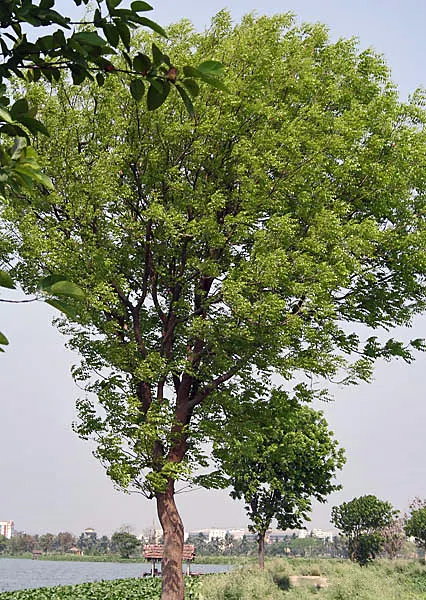
Photo: J.M.Garg, CC BY-SA 3.0 (via Wikimedia Commons)
West Indian Mahogany
Swietenia mahagoni
Also known as West Indian Mahogany, Cuban Mahogany, Spanish Mahogany, Small-Leaf Mahogany, Caoba
Key benefits
✦Traditional uses
✦Long before it became famous in fine furniture, the bark of the West Indian mahogany was a staple of Caribbean bush medicine. Healers in Jamaica, Cuba, and across the islands simmered strips of the reddish inner bark into a deeply bitter decoction, taken in small sips as a tonic for fevers and general debility, much the way quassia and other bitter barks were used elsewhere in the tropics. The tree's seeds were pressed for an oil that found its way into folk liniments rubbed onto tired, aching joints. Meanwhile, the tree's dense, rot-resistant, rose-colored heartwood became one of the most sought-after materials in the world, shaping ships, cathedrals, and the furniture of kings and colonists alike for over three centuries.
How to grow & use it
✦The full apothecary for West Indian Mahogany
Traditional remedies and step-by-step preparations, a complete growing guide, and how to harvest, dry, and store it, all unlocked with HerbLens Unlimited.
- ✦Remedies & preparations
- ✦ Growing guide
- ✦Harvest & storage
From under $6 a month. Free plant identifications always included.
- ✦Ginger
- ✦Cinnamon bark
- ✦Soursop leaf
- ✦Quassia bark
- ✦Gentian root
“For the bitter brew and the broad, generous shade that once anchored an island home.”
Swietenia mahagoni is the original true mahogany that furnished eighteenth-century Chippendale masterpieces and Thomas Jefferson's Monticello, and centuries of relentless harvesting for that beautiful wood eventually left the wild tree endangered and protected under international trade law.
Mahogany bark and seeds are not well studied for internal use, and traditionally only small, occasional amounts were taken. In larger amounts the seeds act as a strong purgative, so avoid concentrated preparations during pregnancy, breastfeeding, or alongside liver-processed medications.