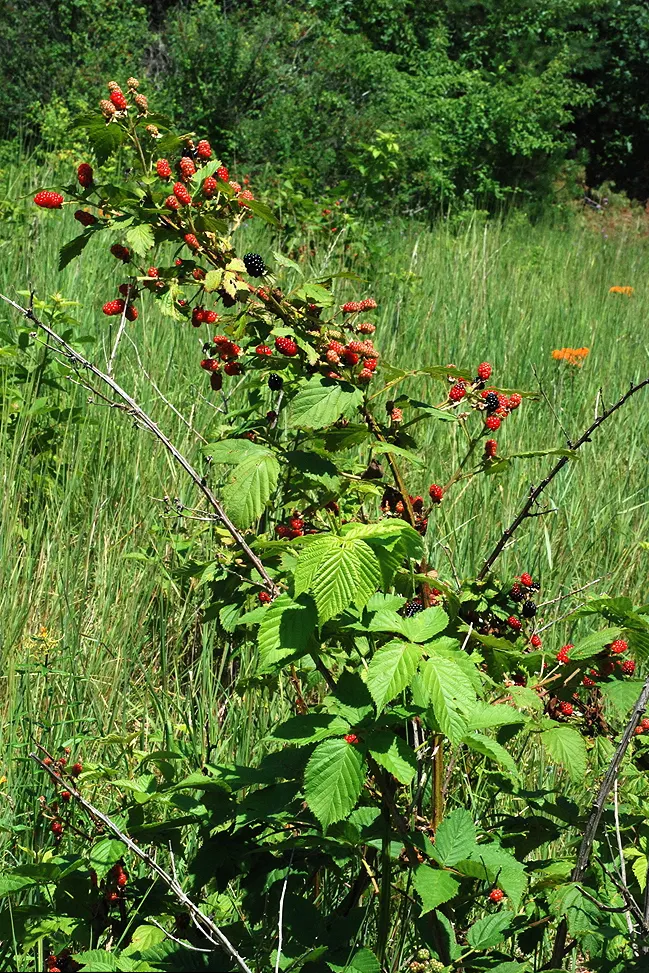
Photo: Doug Goldman. USDA-NRCS-NPDT United States, NY, Tompkins Co., Dryden., Public domain (via Wikimedia Commons)
Allegheny Blackberry
Rubus allegheniensis
Also known as Mountain Blackberry, Allegheny Blackbrry, American Blackberry
Key benefits
✦Traditional uses
✦Long before anyone bottled it, the Allegheny blackberry was a mainstay of Appalachian home medicine. Its leaves, tight with tannins, were steeped into a simple tea that families reached for to settle an upset stomach or ease everyday looseness of the bowels, and the same brew was gargled for a scratchy throat. The dark, sun-warmed berries themselves were eaten fresh, dried for winter, or simmered into syrups understood to be strengthening, especially for children and the elderly. Root bark tea had its own quieter reputation as a gut-settling remedy among early American herbalists, though it was used more sparingly than the gentler leaf.
Growing guide
✦Fresh to dried
✦Traditional preparations
✦Blackberry Leaf Tea
The classic Appalachian home remedy, a mild, astringent tea traditionally sipped to settle a fussy stomach.
How it's made. Steep 1 teaspoon of dried blackberry leaf in 250 ml of just-boiled water for 8 to 10 minutes, then strain. Traditionally taken warm, up to twice a day.
Sore Throat Gargle
The same leaf tea, brewed a touch stronger, gargled for a scratchy or irritated throat.
How it's made. Steep 1 heaping teaspoon of dried leaf in 250 ml of just-boiled water for 10 minutes, cool until comfortable, and gargle rather than swallow.
- ✦Raspberry leaf
- ✦Peppermint
- ✦Chamomile
- ✦Red raspberry leaf
- ✦Agrimony
“For the bramble patch that gives you scratched forearms, purple fingers, and a pie by evening.”
Blackberry canes are tip-layering plants, meaning an arching cane that touches the ground can root right at its tip and start an entirely new plant, which is part of why a single bramble can wander into a thicket within just a few seasons.
The ripe berries are a safe, ordinary food. Blackberry leaf tea is astringent and may cause stomach upset in excess, so it's traditionally used in moderation rather than as a daily drink.